bloc 33rd Square Business Tools - uber 33rd Square Business Tools: uber - All Post
Showing posts with label uber. Show all posts

Wednesday, January 18, 2017

How Arizona Turned the Self Driving Car Into Its Golden Goose


Self Driving Cars  

Ride sharing companies and others are using off-the-shelf technology to accelerate the development of self driving cars. Will autonomous vehicles be able to overcome regulatory capture, and push the technology into mass adoption? States like Arizona might point the way forward.


The reason for the rapid progression of autonomous vehicles is in general, probably due to the lack of regulation. Uber has been able to use off-the-shelf technology innovatively and forced regulators, and everybody else, to take notice.

Is Anyone To Blame?

There is no reason why existing taxi and limo services could not have built a similar platform. In fact, they were and arguably still are in a good position to compete with Uber and other ride-sharing companies. However, their response to this disruption seems counterproductive so far. At the same time, the economic landscape has provided strong incentives for these services to behave this way.

Larry Downes, best-selling author on technology, strategy, and policy wrote about this problem in 2013 in a Forbes magazine article titled "Lessons From Uber: Why Innovation and Regulation Don't Mix." Over time, regulators and the industries they oversee can both develop vested interests in maintaining the status quo. This effect is what political scientists call regulatory capture.

San Francisco has been relatively accommodating and have even promised to rethink any existing regulation. But Uber, which is providing substantial social value, thrives on flexibility; this is why states like Florida and Arizona, which are much less restrictive, are looking like better locations to develop this technology.

Moving Forward

Related articles
In Arizona, Governor Doug Ducey has helped ensure that Uber will not need a permit or license to drive their autonomous vehicles on public roads like they would in San Francisco. The executive order Ducey signed last year establishes a Self-Driving Vehicle Oversight Committee to help officials advance this new technology. While this has encouraged other companies to test their self-driving car projects in Arizona, many services are focusing on San Francisco and California in general. According to Bryant Walker Smith, a law professor and scholar associated with the University of South Carolina and Stanford Law School, California issued Autonomous Vehicle Testing Permits to 20 companies in 2016. Some of the entities that received permits include Volkswagen, Mercedes Benz, and Google.

There is no doubt that some regulation is necessary to ensure public safety, predictable prices, and adequate insurance. These are imperative public interest goals that regulators and innovators alike cannot ignore. Therefore, some level of government oversight is expected and should even receive encouragement by companies interested in autonomous vehicles; a technology that will undoubtedly have an enormous impact on our economy and society. But since it is such a new technology, with so many uncertainties, regulators would be smart to allow for plenty of innovation by leaving as much as possible up to those who know the most about AVs. Otherwise, they run the risk of losing out on all the potential benefits these changes can bring. Michael J. Coren of Quartz magazine emphasizes, "For now, governments are walking a line between public safety, and stifling a technology with huge potential benefits for society."

The Pros & Cons of Regulation

For Uber, it is probably less about the autonomous vehicle testing permit and its cost and more about the additional restrictions that are likely to follow. For example, in addition to accident reports, the California Autonomous Vehicle Testing Regulations require every manufacturer authorized to test autonomous vehicles on public roads to submit an annual report summarizing the disengagements of the technology during testing. In a recent article written for Government Technology magazine, Ryan McCauley notes that California's draft regulations contain language that would "require manufacturers to equip the vehicles with data recorders and release the data within 24 hours to law enforcement agencies."

California officials claim that they are minimizing errors by encouraging the exchange of information between manufacturers and developers. States and municipalities insist that they are primarily interested in collecting crash and disengagement data. But AV companies feel that collecting and making all this information public record will eliminate any competitive advantages they may currently have as a result of extensive development.

Arizona, on the other hand, is being much more lenient on ride-sharing services like Uber. Although Arizona insurance rates are some of the lowest in the country, if Uber can secure strategic partnerships, they may also be able to get a significant discount for themselves and their drivers like they are doing in India. Regardless, I think we can expect Uber will be continuing to seek favorable circumstances that allow them to innovate.

Top Image by Foo Conner


By  Lindsey PattersonEmbed

Author Bio - Lindsey is a freelance writer specializing in business and consumer technology.


Thursday, September 1, 2016

Gig Economy Has People Rethinking the Safety Net


Economics  

The gig economy is a term with a range of meanings, involving peer-to-peer based sharing of access to goods and services, and is becoming a growing trend in the contemporary economy. While offering the people a lifestyle choice, the shareconomy does not come without a big potential downside though.


The sharing economy or gig economy, is supported by the higher end startups - companies like TaskRabbit, Zipcar, Ecomodo, Airbnb, Uber, ZenDrive, Pillow, Uber as well as scores of other me-too copycats. The sharing economy is an umbrella term, also known as the access economy, peer economy, shareconomy and collaborative consumption.

The peer economy allows an individual to share their possessions or services like renting equipment and tools, renting dresses, ride sharing or renting rooms or apartments. It allows the independent person or business to connect with freelancers for a short period of time. This system brings a lot more flexibility to ones job but fails to provide the benefits that the traditional full time job offers, like the retirement plan or medicare plan.

The United States presidential candidate, Hilary Clinton in her campaign called the peer economy as a gig economy. In a speech, Clinton said that the shareconomy is creating innovation, but raises questions about the workplace protection and how the future of the job will look like.

Related articles

The gig economy

A gig economy is just an environment where the independent workers work under a specific job profile in an organization for a short period of time. Short term jobs are gaining more popularity in this digital world because they require minimal overhead. Often a person with a smartphones is all that is needed for a worker to perform a task anytime, anywhere.

So, freelancers have the option of selecting the best projects and temporary jobs around the marketplace and the employers can choose the best person to perform a specific task from a pool of candidates. Digitization, on the other hand, has created a void in the employment sector because there is increasingly smart software available that completes the job in no time and is ultra efficient. The other factor is the financial pressure faced by the businesses dealing with millennials, and their new attitudes regarding work.

In this generation, people keep moving from one job to another in their entire career period, this sharing economy can be viewed as an evolutionary one. The main factor is that it saves businesses a lot of resources, like training, office space and other benefits; and it also helps in dealing with a professional individual who might be viewed as too high profile to maintain as a permanent employee. According to the freelancer’s perspective, this access economy can help in maintaining a balance between professional and personal life, rather than the traditional one, where they are compelled to remain in a particular job.

Sharing economy – Pool of opportunity

There were oDesk and ELance, in the marketplace before the rise of the gig economy where computer designers and programmers could earn their living with a short term job. But in these networks not only created a new channel for freelancers, but also introduced a wide range of unique economic activity to the model. Hence, one could identify that there are many property owners who are able to rent their property for a temporary stay through the rental platforms like HomeAway, onefinestay, Love Home swap and Airbnb and there were many jewelry makers, accessory makers and dress designers benefited through the online marketplace like Etsy and others.

The Wealth of Nations, a book written by the economist, Adam Smith described a market economy in which the individuals engage themselves in commerce with one another. Similarly, the gig economy makes us wonder whether we are moving back to the 18th century economy.

Sharing economy

Over the past two centuries, the evolution of mass production and distribution gave way to the 20th century's salaried employees. The main reason behind the peer to peer exchange is because of the digital and technological revolution. Around ninety percent of the services in the sharing economy are based on the population that is equipped with the GPS enabled computers or smartphones. And the digitization of the social network media like LinkedIn and Facebook helps in gaining the trust among the anonymous peer.

Moving towards the textbook definition of a market economy

Companies like the ZenDrive, TaskRabbit, Airbnb, Uber and Etsy in the access economy are different from the companies like Walmart, Apple or BP, because they are not buying an item made by Etsy, renting an apartment or riding their own vehicle. Their only work is to connect directly the customers with the sellers who have a virtual store, owner of the rental place or the driver of the car. However, these networks are not individual trades, but they are facilitated by a community building and are trained to provide services with hospitality. The businesses under this marketplace offer good quality user experience, customer generated feedback that is similar to that of an organization trying to build and develop their brand.

This collaboration consumption seems to be a unique invention, such that the digital powered combination between the economic activities that takes place inside and outside the organization. The main advantage of this network is that, it brings in the expertise on-demand, and offers brand and trust. The necessity of specializing in a particular field before qualifying as a provider is decreased. Now, any artisan can become a retailer through the online marketplace, Etsy and anyone who wishes to rent their property can connect through Airbnb or a person who owns a car can become an independent partner with BlaBlaCar or Uber.

The participants of the gig economy need not work for a full day; instead they can easily manage their personal life with a highly flexible professional career. For instance, a person can look after their personal responsibilities and then pickup their scheduled ride as a driver by registering under any ride sharing company.

You are the boss of your job

When you are the boss of your job, you might be at ease while working and achieve great success and develop the professional life. But there are also some elements empowering in the traditional work, like the benefits offered by the company, standard payments and steady working hours. Because it is quite difficult to plan the future without knowing the amount of money a person is going to make the next year. And starting a new business has a significant amount of risk; however one can become an entrepreneur by trial and error method and has the chances of unleashing the innovations in the marketplace.

Economists suggest that the key driver of the inequality in the economy for the past two centuries was the concentration of the wealth producing capital. The ideal sharing economy means that the economy is based on the millions of micro entrepreneurs who have their own business, rather than the small cabal of giant organizations. Even the digitalized generation that has skilled worker network raises the specter of inequality in the economy.

With the help of the mobile apps, the customers can get their groceries from Instacart, get their drinks through Drizly or get a ride in a luxurious car. But the sharing economy does not come without risk. Critics point out that the gig economy has become just another way to deliver more expensively priced conveniences to those with enough money to pay.

Farhad Manjoo also points out that a great number of sharing economy start-ups have failed. "The lesson so far in the on-demand world is that Uber is the exception, not the norm. Uber, but for Uber — and not much else," he writes in the New York Times.

In many countries the main aspect of the social safety net is allied with the traditional full time job with a government or a large company. Though the main aspects of the sharing economy are not distinct, we must consider the overall welfare provisions in a society that is decoupling from the traditional jobs-based economy.


By Anand RajendranEmbed

About the Author -  Anand Rajendran is CEO and Co-Founder of Dectar, best PHP scripts development company located in India. Dectar is a part of Casperon Technologies a leading social and mobile development company which is Developing Uber for X apps like Couriero - On Demand Delivery Services App for the past 3 years. Anand's a Tech geek, Digital marketing expert, Entrepreneur, and Atheist who loves to write everything about PHP Scripts and mobile application development.


Friday, July 15, 2016

Apple Endorses China's Leading Ride-Hailing Firm with a $1 Billion Investment


Self Driving Cars  

Chinese Uber competitor, Didi Chuxing has raised billions of dollars in its latest fundraising effort, giving it a host of powerful allies including Apple. The partnership looks to push forward the development of self driving cars.


Apple's desire to enter the transportation industry has been quite apparent for some time now,
with numerous media reports suggesting that the company plans to develop autonomous driving technology and launch a driverless taxi service, even though an official confirmation for those intentions is yet to be provided.

Now, the Cupertino, California-based company has made a move that puts it a step closer to becoming a significant factor in the ride-sharing business, after making a substantial investment into one of the biggest companies in that field. Last week, Apple announced that it has decided to invest into the leading car-hailing service in China, Didi Chuxing, in a move that analysts interpret as Apple's attempt to boost its driverless vehicle research efforts.

China's Unchallenged Ride-Hailing Service

Apple said that it will invest $1 billion in Didi Chuxing, a strategic move that is not very typical of the tech giant, as it is not known as for spending a lot of money on buying other companies. But, there are a few very good reasons behind this decision. First of all, Didi is the largest player in China's ride-sharing market, which is undergoing a major expansion. It is the only company that is preventing Uber from establishing dominance in the ride-hailing business in the world's most populous country, claiming to have a 90% share of the market, providing over 11 million rides per day, with 300 million users across 400 cities. This means that Apple might gain a substantial financial benefit from this investment.

Related articles
Besides that, this investment is also part of Apple's bid to gain more trust with Chinese authorities, with authorities imposing stricter and more frequent controls over how the way the company has been doing business there, closing some of its stores around the country, in line with their intentions to favor domestic companies at the expense of foreign businesses.

By buying a stake in a Chinese company, Apple wants to show that it is willing to be a contributor to the county's economy, rather than just taking advantage of China's growing middle class consumerism.

Tim Cook and Didi Chuxing's Jean Liu

“Didi exemplifies the innovation taking place in the iOS developer community in China,” Tim Cook, chief executive of Apple, said in a statement. “We are extremely impressed by the business they’ve built and their excellent leadership team, and we look forward to supporting them as they grow.”

Apple's Car Project

On top of expanding its businesses and exploring opportunities for new revenue streams in China, along with improving its relations with local authorities, Apple's investment into Didi Chuxing is also an attempt to ramp up its driverless car program. The ride-hailing business is widely regarded as the best way to bring self-driving vehicles to the road while this novel technology is still in its infancy, and Didi Chuxing can be of great help to Apple in this regard.

Chinese authorities have been pretty busy creating the necessary conditions to attract automakers and tech companies to test autonomous cars on the country's roads lately, so Apple's collaboration with a company that operates a large fleet of taxis and has hundreds of millions of users in most of the largest cities in China will make it easier for the Californian tech giant to overcome all potential regulatory and technical obstacles and start testing self-driving vehicles as soon as possible.


By Jordan PerchEmbed


Author Bio - Jordan Perch is an automotive fanatic and “safe driving” specialist. He is a writer for DMV.com, which is a collaborative community designed to help ease the stress and annoyance of “dealing with the DMV.”

Sunday, June 26, 2016

Racing Towards Tomorrow: Who Will Build the Ideal Self-Driving Car?

Self Driving Cars  

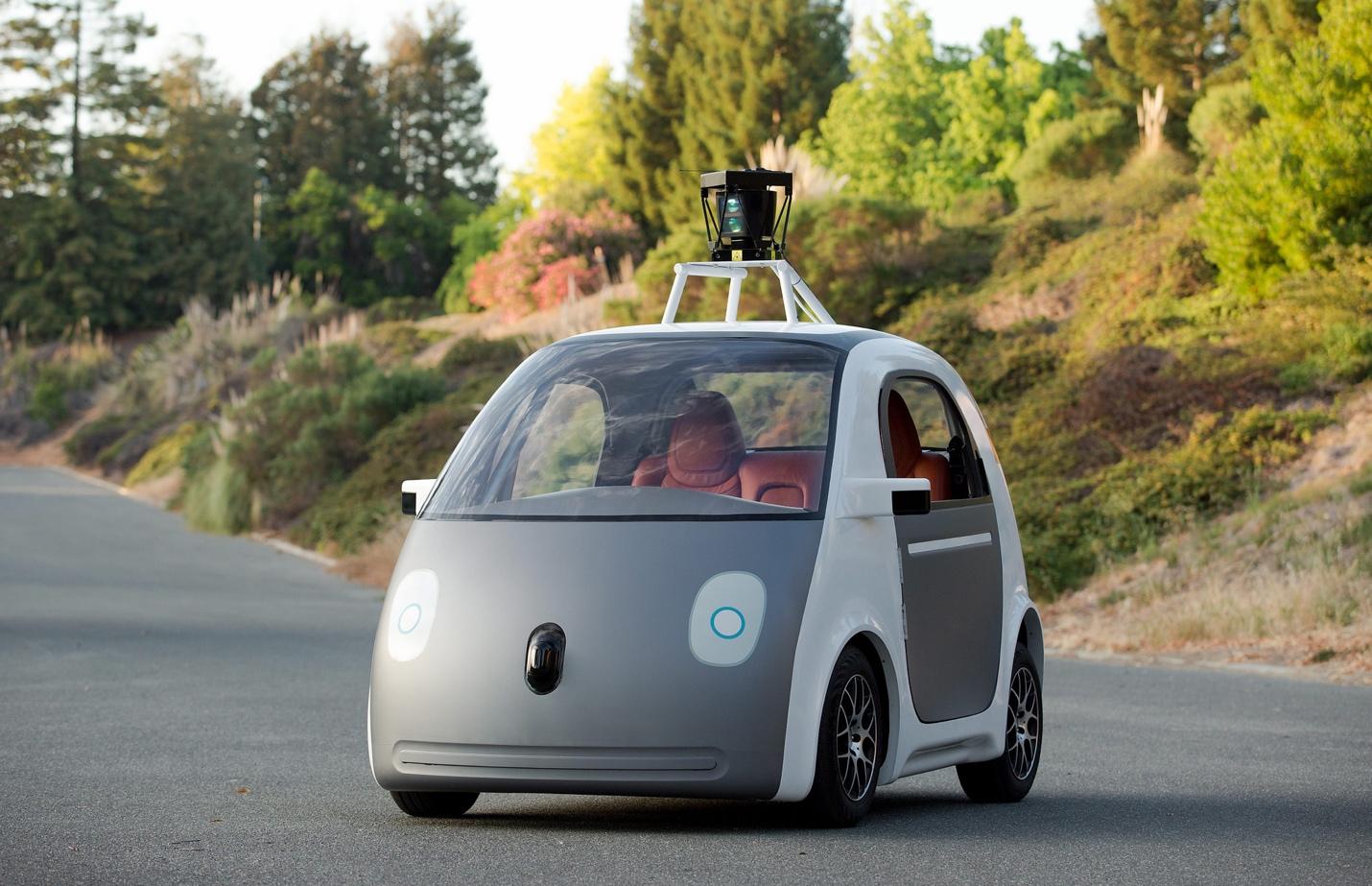
While we are still a decade or so away from self driving cars being widely used on our roads, a number of companies are racing to push the technology forward. Already Google's Koala has thousands of road testing hours in, and Tesla is in the hands drivers (or not depending on if they are using automated driving), and many others are working on the problem.


The future keeps calling to us, and it seems to be coming for our cars next. Many major companies are going down the self-driving road, such as traditional manufacturers of cars like Audi and Nissan, and more tech-oriented corporations like Google and Tesla. Numbers fluctuate depending on the source, but estimates point to somewhere between 5 and 10 years as being the sweet spot where drivers may opt of traditional cars and turn to autonomous vehicles instead. Some have hit the road already.

GE

The more conventional applications of this technology are pretty well known to people already. One of the more common adopters is GE, who have used their autonomous systems in their Cadillacs. These are not as complex as most common self-driving cars, but they do provide assistance for drivers in what's a pretty large vehicle, which is impressive on its own.


Google

Google has done reasonably well when it comes to attracting media attention over this new type of vehicle. Koala has been let loose by Google on to California roads to test its capabilities. With the use of lasers, cameras and radar, this entirely autonomous vehicle navigates roads while being able to differentiate buildings, people, vehicles, motorists and all manner of obstructions in its path.

Google Koala


Since May of 2015, several Koalas have been put out into the wild, testing their capabilities against traffic of all sizes, and have traveled as far as Austin, Texas, accumulating more than a million miles driven without a human driver controlling the wheel. And while there have been over a dozen minor accidents, however, Koala was never the guilty party, which has given Google the confidence to make their system available in the next five years.


Delphi and Audi

While all those hours are impressive, Delphi, made in partnership between Audi and Delphi Automotive, traveled thousands of miles to cross the continental United States, from San Francisco to New York City. Back in April of 2015, Delphi made a classic American road trip in a technologically advanced way. Across bridges, through tunnels and past landmarks, Delphi rode at speeds of up to 70 miles per hour, driving for its passengers 99% of the time. Audi was so impressed with the results that data from Delphi was used to implement autonomous features in some of the cars featured in their 2016 line.


Related articles

Nissan

Nissan hopes to make a similar feat as Audi. They've planned a coast-to-coast drive for an autonomous car to show off Japan's highways, landmarks, and to set the tone for 2020, which is when they hope to have self-driving cars on the road. To make this dream a reality, they've made friends with the NASA Ames Research Center and have planned a research and development partnership to last five years. However, meeting the demands of regulations, for safety and operating instructions, they've made room for possible delays in their eventual public reveal.


Tesla

Tesla's Model S cars have brought drivers closer to that dream of automated vehicles. It was first debuted in 2015, and garnered quite a bit of attention for what it could do without interference. Now that they're on the road, divers have assistance in avoiding collision with other cars, changing lanes and navigating troubling traffic. The cars have been so effective that Tesla continues to collect their data to better develop their next line of autonomous vehicles. And by the time they're done, they may have some buyers ready to purchase a fleet of their cars.

Tesla's Model SSelf Driving

Uber

Travis Kalanick, Uber's CEO, has built a lab for robotics testing in Pittsburgh and has been buying autonomous cars whenever he can. But his dream vehicle seems to be the Tesla of the future, and has vowed to buy many by 2020 if they continue to impress him and help make his dream of constant smooth traffic a reality.

The Future

If one were to bet on the future of the self-driving car, companies like Tesla, Google and Audi seem to offer up the most confidence by having the tested hours on the open road and the consistency in their data sets. Google's Koala has the most road testing, and Tesla is in more hands of independent drivers. Audi's a little slow to catch up to this competition, but they've got plans in the works to hit the road in a big commercial endeavor real soon.

Regardless of who gets there first, companies like Uber and regular consumers will be a real deciding factor in determining how far this technology will go and who will adopt it first. The real question is whether local governments can issue proper licensing in time and insurance providers figure all the ins and outs of this game-changer.


By Lindsey PattersonEmbed


Author Bio - Lindsey is a freelance writer specializing in business and consumer technology.

Monday, February 2, 2015

Uber Starting A Robotics Research Center to Develop Self-Driving Cars

 Self Driving Cars  
Driver-on-demand service Uber is building a robotics research lab in Pittsburgh, near Carnegie Mellon University to “kickstart autonomous taxi fleet development.”


Uber is reportedly starting up a research center in partnership with Carnegie Mellon University to “kickstart autonomous taxi fleet development,” sources close to the decision have informed TechCrunch. The strategic partnership includes the creation of the Uber Advanced Technologies Center, near the CMU campus.

Related articles
"The center will focus on the development of key long-term technologies that advance Uber’s mission of bringing safe, reliable transportation to everyone, everywhere," the company posted on its blog.

Uber is hiring more than fifty senior scientists from Carnegie Mellon as well as from the National Robotics Engineering Center, a CMU-affiliated research entity say insiders.

Carnegie Mellon, is well-known for its robotics research.  According to one source, Uber has “cleaned out” the Robotics Institute, reports Tech Crunch.

"When there is no other dude in the car, the cost of taking an Uber anywhere is cheaper. Even on a road trip."


"Uber is a rapidly growing company known for its innovative technology that is radically improving access to transportation for millions of global citizens," stated Andrew Moore, Dean of the School of Computer Science, Carnegie Mellon University. "CMU is renowned for innovations that transform lives. We look forward to partnering with Uber as they build out the Advanced Technologies Center and to working together on real-world applications, which offer very interesting new challenges at the intersections of technology, mobility, and human interactions."

Uber the driver-on-demand service, has raised more than $4 billion since its 2010 launch, has already announced that it plans to replace its drivers with autonomous vehicles.

Acccording to Uber CEO Travis Kalanick “The reason Uber could be expensive is you’re paying for the other dude in the car,” Kalanick told Business Insider. “When there is no other dude in the car, the cost of taking an Uber anywhere is cheaper. Even on a road trip.”


SOURCE  Tech Crunch


By 33rd SquareEmbed