bloc 33rd Square Business Tools - Rudolf Jaenisch 33rd Square Business Tools: Rudolf Jaenisch - All Post
Showing posts with label Rudolf Jaenisch. Show all posts

Sunday, January 1, 2017

Researchers Engineer Gene Pathway to Grow Brain Organoids with Surface Folding


Stem Cells

Scientists have demonstrated that 3D human cerebral organoids can be effective in modeling the molecular, cellular, and anatomical processes of human brain development. They also suggest their work could be a new path for identifying the cells affected by Zika virus.


In newly published research in the journal Cell Stem Cell, researchers at Whitehead Institute have found a specific gene pathway that appears to regulate the growth, structure, and organization of the human cortex. They demonstrated that 3D human cerebral organoids—miniature, lab-grown versions of specific brain structures—can be effective in modeling the molecular, cellular, and anatomical processes of human brain development. The researchers suggest their work could also provide a new path for identifying the cells affected by Zika virus.

“We found that increased proliferation of neural progenitor cells (NPs) induces expansion of cortical tissue and cortical folding in human cerebral organoids,” says Yun Li, a lead author of study and post-doctoral researcher at Whitehead Institute. “Further, we determined that deleting the PTEN gene allows increased growth factor signaling in the cell, unleashing its growth potential, and stimulating proliferation.”

Researchers Engineer Gene Pathway to Grow Brain Organoids with Surface Folding

Related articles
The findings lend support to the notion that an increase in the proliferative potential of NPs contributes to the expansion of the human cerebral neocortex, and the emergence of surface folding.

With normal NPs, the human organoid developed into relatively small cell clusters with smooth surface appearance, displaying some features of very early development of a human cortex. However, deleting PTEN allowed the progenitor population to continue expanding and delayed their differentiation into specific kinds of neurons—both key features of the developing human cortex.

“Because the PTEN mutant NPs experienced more rounds of division and retained their progenitor state for an extended period, the organoids grew significantly larger and had substantially folded cortical tissue,” explains Julien Muffat, also a lead author and post-doctoral researcher at MIT's Whitehead Institute.

"We have demonstrated that 3D human cortical organoids can be very effective for Zika modeling."
The researchers found that while PTEN deletion in mouse cells does create a somewhat larger than normal organoid, it does not lead to significant NP expansion or to folding. “Previous studies have suggested that abnormal variation in PTEN expression may play an important role in driving brain development conditions leading to syndromes such as Autism Spectrum Disorders,” says Rudolf Jaenisch, Founding Member of Whitehead Institute and senior author of the study. “Our findings suggest that the PTEN pathway is also an important mechanism for controlling brain-structure differences observed between species.”

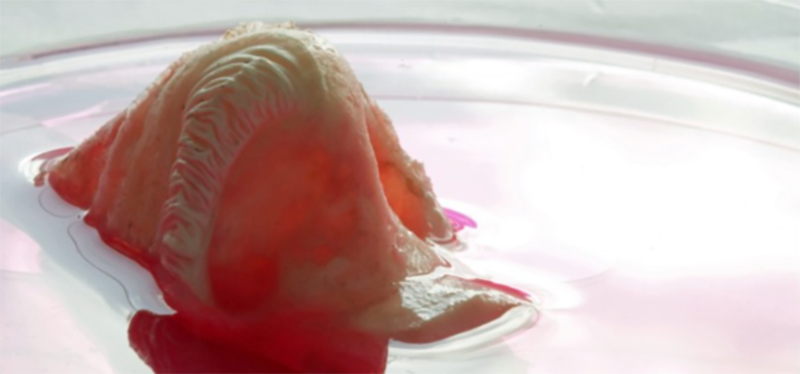
Brain Organoids
Image Source: Yun Li and Julien Muffat

In the study, deletion of the PTEN gene increased activation of the PI3K-AKT pathway and thereby enhanced AKT activity in the human NPs comprising the 3D human cerebral organoids; it promoted cell cycle re-entry and transiently delayed neuronal differentiation, resulting in a marked expansion of the radial glia and intermediate progenitor population. Validating the molecular mechanism at work with PTEN, the investigators used pharmacological AKT inhibitors to reverse the effect of the PTEN deletion. They also found that they could regulate the degree of expansion and folding by tuning the strength of AKT signaling—with reduced signaling resulting in smaller and smooth organoids, and increased signaling producing larger and more folded organoids.

Finally, the researchers utilized the 3D human cerebral organoid system to show that infection with Zika virus impairs cortical growth and folding. In the organoids, Zika infection at the onset of surface folding (day 19 of development) led to widespread apoptosis; and, ten days later, it had severely hampered organoid growth and surface folding. Zika infection of 4-week-old organoids, showed that PTEN mutant organoids were much more susceptible to infection than normal control organoids; notably, they showed increased apoptosis and decreased proliferation of progenitor cells.

“Although not an original goal of our study, we have demonstrated that 3D human cortical organoids can be very effective for Zika modeling—better enabling researchers to observe how human brain tissue reacts to the infection and to test potential treatments,” Li says.


SOURCE  Whitehead Institute via Newswise


By  33rd SquareEmbed


Tuesday, September 16, 2014

Researchers Improve Creation of Pluripotent Stem Cells With Programming Techniques
 Stem Cells
Researchers have developed a new cocktail that coaxes adult cells to become pluripotent stem cells of a high enough quality to be used in therapeutic applications. Their research showed that using a different combination of reprogramming factors can produce a much higher quality results.


Induced pluripotent stem cells (iPSCs)—adult cells reprogrammed back to an embryonic stem cell-like state—may hold the potential to cure damaged nerves, regrow limbs and organs, and perfectly model a patient’s particular disease. Yet through the reprogramming process, these cells can acquire serious genetic and epigenetic abnormalities that lower the cells’ quality and limit their therapeutic usefulness.

When the generation of iPSCs was first reported in 2006, efficiency was paramount because only a fraction of a percentage of reprogrammed cells successfully became cell lines. Accordingly, the stem cell field focused on reprogramming efficiency to boost the pool of cells that could be studied. However, as scientists gained an increased understanding of the reprogramming process, they realized that myriad variables, including the ratio of reprogramming factors and the reprogramming environment, can also greatly affect cell quality.

"This work is only a proof of principle that says we must find this ideal combination. Now we should be able to find the optimal combination and try it in human cells to see if it works."


Now researchers working in the lab of Whitehead Institute Founding Member Rudolf Jaenisch together with scientists from the Hebrew University have determined that the reprogramming factors themselves impact the reprogramming efficiency and the quality of the resulting cells. Their work is published in the current issue of the journal Cell Stem Cell.

“Postdoctoral researcher Yosef Buganim and Research Scientist Styliani Markoulaki show that a different combination of reprogramming factors may be less efficient than the original, but can produce much higher quality iPSCs,” says Jaenisch, who is also a professor of biology at MIT. “And quality is a really important issue. At this point, it doesn’t matter if we get one colony out of 10,000 or one out of 100,000 cells, as long as it is of high quality.”

To make iPSCs, scientists expose adult cells to a cocktail of genes that are active in embryonic stem cells.  iPSCs can then be pushed to differentiate into almost any other cell type, such as nerve, liver, or muscle cells. Although the original combination of Oct4, Sox2, Klf4, and Myc (OSKM) efficiently reprograms cells, a relatively high percentage of the resulting cells have serious genomic aberrations, including aneuploidy, and trisomy 8, which make them unsuitable for use in clinical research.

Using bioinformatic analysis of a network of 48 genes key to the reprogramming process, Buganim and Markoulaki designed a new combination of genes, Sall4, Nanog, Esrrb, and Lin28 (SNEL). Roughly 80% of SNEL colonies made from mouse cells were of high quality and passed the most stringent pluripotency test currently available, the tetraploid complementation assay. By comparison, only 20-30% of high quality OSKM passed the same test.  Buganim hypothesizes that SNEL reprograms cells better because, unlike OSKM, the cocktail does not rely on a potent oncogene like Myc, which may be causing some of the genetic problems. More importantly, the cocktail does not rely on the potent key master regulators Oct4 and Sox2 that might abnormally activate some regions in the adult cell genome.

Stem Cell network
Image Source: Cell Press
Related articles
In the diagram above, a schematic presentation of Bayesian network demonstrates the hierarchy of a subset of pluripotent genes that leads to a stable and transgene independent pluripotency state. Sall4, Nanog, Esrrb and Nanog (SNEL) are marked by a red circle.

To better understand why some reprogrammed cells are of high quality while others fall short, Buganim and Markoulaki analyzed SNEL colonies down to the genetic and epigenetic level. On their DNA, SNEL cells have deposits of the histone protein H2AX in locations very similar to those in ESCs, and the position of H2AX seems to predict the quality of the cell. The researchers believe this characteristic could be used to quickly screen for high quality colonies.

But for all of its promise, the current version of SNEL seems unable to reprogram human cells, which are generally more difficult to manipulate than mouse cells.

“We know that SNEL is not the ideal combination of factors,” says Buganim, who is currently a Principal Investigator at Hebrew University in Jerusalem. “This work is only a proof of principle that says we must find this ideal combination. SNEL is an example that shows if you use bioinformatics tools you can get better quality. Now we should be able to find the optimal combination and try it in human cells to see if it works.”


SOURCE  Whitehead Institute

By 33rd SquareEmbed