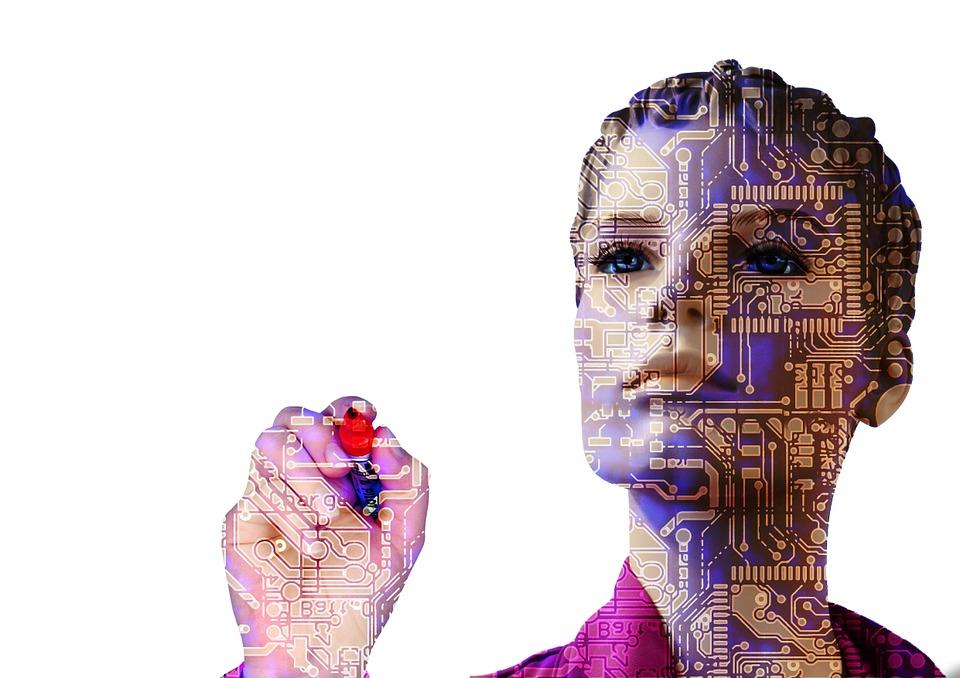
As the internet of things or IoT continues to permeate into work and life, there is a rapid movement across industries toward adopting new technologies and systems that facilitate its integration. IoT introduced new concepts of doing business, from virtual workplaces, connected apps, to cloud computing technology. In turn, tech advancements facilitated connectivity and data transmission between applications, smart devices, and gadgets through the internet.
Showing posts with label IoT. Show all posts
Thursday, November 2, 2017
Thursday, June 29, 2017
Thanks to medical and nutritional breakthroughs, people are now leading longer, healthier lives. About 65 million US citizens are providing elderly care for their parents and grandparents, and this number is expected to increase.
We all want to live independently our entire lives, but as we get older, it becomes more difficult. In the past, elderly individuals incapable of leading fully independent lives often found themselves confined in nursing care or rehabilitation centers.
Their loved ones don't want them living at home by themselves despite the fact that they may still have mental acuity and physical strength. Taking care of an aging loved one at home is still — has always been — an option. Anyone who has ever played to role of a sole caregiver to an aging loved one is quite familiar with the anxieties that come with it– is grandpa wandering out of the house in the middle of the night? Is mom's bedroom warm enough in the middle of winter? Is Nana safe while home alone?
The Internet of Things
Fortunately, the adoption of smart home technology and the Internet of Things (IoT) is making this transition significantly easier. It allows people to stay at home without affecting their independence or costing the earth. When it comes to in-home care, smart home technology, and IoT comes with significant improvements for the companies providing care, families arranging for the care, and for the individuals requiring care.It doesn't matter whether they live at home or a nursing facility, the Internet of Things will improve the quality of life for the elderly. But how exactly will IoT improve the quality of elderly care? Here's how:
Related articles
Home Care Companies Will Enhance Customer Experience with IoT Solutions
Home care companies are using IoT technology to provide a high level of care at an affordable cost. Home care companies can use smart home security systems with sensors placed in mattresses, windows, and doors to transmit data. If these systems are installed in a multi-unit apartment, it can be used to develop a system that alerts the building supervisor in case of a problem. This can facilitate quick responses via remote monitoring.Remote patient supervision can significantly reduce the cost of care for both the home care company and the family. In addition to that, the use of IoT solutions facilitates a high level of autonomy and privacy for an individual. Reporting and the use of dashboards allows better communication between the facility and the individuals family — they know their loved one is doing okay and is well taken care of.
Remote Monitoring Offers Safety and Peace of Mind
The ability of IoT and other smart technologies to provide remote monitoring to increase safety and security is a huge concern among many families. They are worried that something might happen to their loved ones if no one is around to provide assistance. Previously, this required the presence of a professional to monitor an individual. Many people who were after a certain level of privacy and autonomy didn't like this, plus hiring a night caregiver made the entire process more expensive.The availability of IoT and other smart home solutions allows these companies to implement remote caregiving for their clients. Caregivers can be remotely updated as events happen in real time. Knowing this, safety and concern is no longer a concern for families — which gives them peace of mind — and individuals can get their desired level of autonomy and privacy.
Mobile Technology Has Made Everything Easier
Mobile technology has made the process of providing care for aging individuals easier. Families can refill prescriptions online, conduct remote interviews with potential employers, and individuals within the facilities can initiate video chats with colleagues and friends. Mobile technology and the Internet of Things, in addition, are on the verge of revolutionizing health care. Patients can easily connect with clinicians via mobile devices for services such as prescriptions, advice, diagnosis, and more.The advantages of IoT and other smart home technologies will continue to become even more essential as the population increases and the demand for family caregivers continues to increase. Home care providers will become more affordable amidst the increasing aging population, thanks to technology, the Internet of Things, and smart homes. The future is even more promising since technology solutions will become more affordable, which will make the IoT and other artificial intelligence systems accessible to many homes and families.
| By | Embed |
After graduating from medical school at the University of Michigan, Isaac started his own private orthopedic practice in Riverton Utah. Having dealt with and overcome many of the obstacles that come with entrepreneurship and small business ownership, Isaac has found a passion for helping the up and coming generation thrive in their careers and ultimately their lives. | |
Sunday, February 19, 2017
Computers
One of the most transformative inventions of the past 75 years has been the microchip that makes modern computers possible.
To appreciate what an influence the microchip has had in our lives, consider the first generation of computers in the 1940s and 1950s. Early computers literally weighed tons, used thousands of vacuum tubes, consumed thousands of watts of electricity, and yet had less memory and computing power than home PCs of the mid-1980s.
What happened? Integrated circuits (ICs) were invented.
Chips and Transistors
Computer chips began as transistors, invented by Bell Labs in 1948. These were essentially electrical switches set in semi-conducting materials like silicon and germanium. They could amplify and direct current along different pathways as needed. The idea of miniaturizing the components and creating more complex (integrated) circuits appeared around 1952, but the first ICs were produced by Jack Kilby of Texas Instruments in 1958. This was the first microchip. The race for smaller and more powerful chips was on.Chips Transforming Lifestyles
As one example, think of the automobile. The muscle cars that came of age in the 1960s were gas-guzzlers that might not get 10 mpg. This was followed by international oil shortages and growing concern for the environment. That led to electronic emissions systems controlled by microchips. They worked so well that they were incorporated into fuel injection systems and then a surprising variety of electronic features. Today's Ford Mustang is a very different car from the 1964 original.Related articles
Microchips Today
Today, a good microchip can have 25 million transistors per square millimeter. They are in almost everything, from coffee makers to televisions. And they have continued improving efficiency in almost every industry. Consider screen printing, the classic means of creating multiple image impressions by forcing special inks through partially blocked screens. Today, high-tech graphics companies like Schilling Graphics serving the screen print trade can create computer-to-screen (CTS) images much faster and more accurately then traditional screen prep. One common product - circuit boards.The Computers of Tomorrow
The Internet of Things (IoT) is the network of smart devices expected to grow into the billions within the next few years. Even our pets are getting microchipped. And tomorrow's microchip? Scientists are already working on quantum computing and neural networks. Quantum circuits will use sub-atomic particles capable of multiple states, while neural networks will mimic the human brain. That means infinitely smaller and more powerful chips that will transform our world even further.
| By | Embed |
Anica is a professional content and copywriter who graduated from the University of San Francisco. She loves dogs, the ocean, and anything outdoor-related. She was raised in a big family, so she's used to putting things to a vote. Also, cartwheels are her specialty. You can connect with Anica here. Anica writes on behalf of the University of Florida, with degree programs such as a bachelor of science in biology that advance the development of biofuels and other conservation directives. | |
Thursday, October 27, 2016
Internet of Things
What exactly do people mean when they refer to the "Internet of Things?" Guest writer Blaine Kelton explores how the IoT is already impacting our lives, from smart house systems to transportation to personal health.
If you're like me, you might find the phrase "Internet of Things" to be somewhat shrouded in mystery. Indeed, it's tossed around quite a bit these days, and sometimes it's hard to get a grasp of what exactly people mean when they're talking about it. Frankly, a lot of us use the label when it doesn't really apply; the real Internet of Things (IoT) simply refers to the automatic connection and communication between systems and devices.
In terms of applications, it's an entirely different subject and one that's becoming increasingly clear by the day. As we gain a better grasp of where and how the the Internet of Things
The global market for Internet of Things systems related to digital security is on pace to exceed $28.9 billion by the year 2020
The most recent example of progress is in a report by MarketWatch that suggests the global market for Internet of Things systems related to digital security is on pace to exceed $28.9 billion by the year 2020. That's a pretty mind-blowing number, and it speaks to the significance (and business potential) of improved digital security systems. Basically, these systems include identity protection, device security, file encryption, and cloud securities—all sectors that contribute to protecting the personal information of individuals and companies alike. A $28.9 billion market would certainly be among the largest of those being created by the evolution of the Internet of Things, but the information security sector is by no means the only one already on pace for significant growth in the coming five years or so. We're seeing significant Internet of Things expansion in the following areas, too.
Related articles
Smart Home Systems
Arguably the most exciting application of the Internet of Things for the general public, the idea of a "smart home" seemed tech-y and vaguely futuristic just a few years ago. Now, it's an ever-expanding reality that exemplifies the potential of the Internet of Things on a smaller scale (as opposed to the vast world that comprises digital security). The idea is that intelligent devices within the home connect together to keep your environment safe, comfortable, energy-efficient, and optimized to your preferences. Security, climate control, utility usage, and entertainment are all under the umbrella of the smart home concept. With all kinds of companies beginning to sell the products and systems needed to make it happen, a 2014 VentureBeat article claimed that this will be a $71 billion market by 2018!Vehicle Fleet Regulation
While home systems make perfect sense to a growing consumer base that's used to seeing related products in stores, vehicle fleet regulation is an enormous branch of Internet of Things implementation that is less familiar to the public. Yet when you consider the potential of linking up fleets to each other and to company bases through WiFi and GPS tracking, the implications are far-reaching. As illuminated in a report by Networkfleet, such connectivity can help businesses with "making more informed dispatching decisions, monitoring fuel economy, vehicle maintenance," and more. With these benefits spread across the innumerable businesses that still utilize vehicle fleets, it's clear that the potential market size for devices in this area is gigantic.Personal Health Management
Healthcare is one of the most expansive and influential sectors in which the Internet of Things is becoming relevant, and to some extent that's because it's being utilized in hospital data sharing. However, as Forbes noted in an article last year, there are also numerous unique applications of Internet of Things principles in personal healthcare. That article touched on infant monitors, insulin trackers for diabetics, smart diapers that can detect infections, and even smart pills that can help to record whether or not medication is being used appropriately. We're also seeing fitness trackers and other wearable technologies significantly improve the ways in which we monitor exercise and basic health. Personal health management ultimately has the potential to bring about some of the most significant use of smart products alongside the implementation of the Internet of Things.Considering all of these examples, it's anyone's guess how many billions go into the expansion and improvement of the Internet of Things in the next five years. It'll definitely be interesting to watch it all unfold.
| By | Embed |
Author Bio - Blaine Kelton is a freelance writer currently living in Beverly Hills, Calif., who enjoys covering a number of different topics. From the latest technological advancements to new albums by his favorite artists, he's eager to just write and get his work out there.
Monday, October 24, 2016
Artificial Intelligence
Could artificial intelligence hold the key to the success of the internet of things? Some experts think so. Here’s an interesting look at how AI and the IoT relate to one another.
One of the most heavily hyped concepts of the decade, the Internet of Things promises to create a whole new world of convenience. Massive volumes of data will be created by interconnected devices and sensors, allowing a multitude of industries to grow and change with this new insight. Yet at the moment there are still several barriers between the present and an exciting interconnected future.
Relationship between AI and IoT
If you look at the capabilities of the Internet of Things from Nokia Networks or other providers currently working on it, it involves the movement of vast amounts of data. This data can be used in a variety of real life situations, predicting the flow of traffic in a city or assisting with logistics in agriculture. Eventually, with the use of sensors and cameras, new devices like self-driving cars will become a reality. Yet at the same time the sheer volume of data required to carry out these tasks is often beyond human analysis. This is why many industry experts believe that artificial intelligence will need to be able to step in and fill these gaps.For the IoT to work on a widespread basis, big data analysis requires both speed and accuracy on a level beyond human capabilities. But with the assistance of AI technology, intelligent machines would be able to take vast quantities of data points and quickly sift through them to pull out the points that are the most relevant. With those points, real-time updates and decisions can then be made to facilitate the operation of the IoT.
Related articles
AI applications for IoT
There are a number of ways in which the two technologies could work together – equipped with new sensors, smart machines can gather a wider range of information. This can be used to give machines the ability to see with cameras and hear with sonic sensors. With more data to work with, AI systems can make increasingly accurate predictions based on an individual’s preferences, making machines smarter than ever. At the same time, AI applications can cull through mountains of data points to extract the bits that will be meaningful for users.The bottom line
There are still a number of issues that need to be worked out in both spheres of technology. For AI and IoT to work together in perfect synchronicity, issues with compatibility will need to be smoothed over. Security and privacy is a major issue for the Internet of Things, particularly with recent high-profile cyber-attacks in the public consciousness. Yet the trajectory of this future trend has already been put in motion. If billions of objects are connected in the next few years, it means that AI could be the viable support system that will allow this technology to soar.Sunday, August 21, 2016
IoT
The idea of the brilliant inventor waking up to find an automated breakfast being made, their favorite music played, and a notification from their house robot that they have twenty-three minutes to leave for work once seemed so futuristic that we would never get there. Today, however, the internet has made this a possibility not just for geniuses, but for anyone with a good wifi connection.
If your hope is to awaken to a fully automated home, you already can. You can schedule your coffee and shower to start, preheat your oven if you want to bake, turn your radio or television to your favorite show and even lock the door behind you. The future of these smart items can even go further than this. There are both personal and commercial applications, and the limits are only due to lack of imagination.
Related articles
Efficiency
Smart power meters from electric companies offer the opportunity not only to know how much power is used within a day but how much is used at any time. Smart items can keep track of when they are working, and this can offer a look at exactly what percent of your energy bill is being caused by anything from a bathroom heater to the lights in a single room to each appliance in your home. With this information, you will know exactly what upgrades will save you the most in energy bills and pay for themselves.Security
Smart locks that are opened remotely by you and a few others are a great way to create an unpickable door. Potentially, it can also lead to a door and windows that will lock a thief inside, take a picture of them and notify the authorities with a photo of the intruder while keeping you updated by smartphone. If you are the parent of a teen you can also see if they are actually going to school or coming home when expected.Targeted Advertisements
The internet has discovered the power of targeted advertisements. Smart commercial audio-visual equipment applications can have new, personalized uses. If you have Bluetooth or locating software activated, advertisers can offer to place discount codes on your smartphone when you enter a store that they cover, in exchange for watching an advertisement that you would like. This could be done on your phone, on video billboards within the store, or even on smart contact lenses or glasses.Health Monitoring
Finally, it may be possible to wear smart bracelets if you are at a health risk that can take and analyze pulse, sweat, electrical current and possibly even blood. This can let you know, long before you otherwise would, when to seek medical care that can save your life. It may even be able to call 911 for you if you become unresponsive.| By Marlena Stoddard | Embed |
Author Bio- Marlena Stoddard is a freelance writer who received her BA from the University of Georgia. She currently resides in Atlanta with her husband, two kids, and puppy Molly Belle.
Tuesday, April 12, 2016
Computers
More than just a programmer generating computer code, a software engineer involves a lot more design factors critical to the successful creation and management of software. A software engineer will typically plan out the tasks and conditions with which other programmers in a team project will need to comply.
Since every system's software needs and its functionality are different, a competent software engineer must concern themselves with the safety of how the system will operate in terms of the software driving the system and its component machinery. They must also anticipate how to make such software-based projects cost-effective for the client soliciting their services. Here are a few reasons why software engineering is an in-demand field for today and the future.
Related articles
The Licensing Factor
According to Webopedia.com, U.S. Law requires anyone using the title engineer to be licensed by a state licensing board. Such individuals must also be in good standing. Generally, job titles that are regulated in this fashion are typically more difficult to acquire and this fact tends to generate more demand for qualified people to fill such positions.
Custom Software Design
Clients are often in search of professionally licensed software engineers to evaluate their systems and determine how to design safe, affordable software to comply with all the conditions they have set forth to be met. Since new systems are always being introduced to the market, the need for software engineers to approach these problems—while following industry standards and best practices along the way—tend to be in demand due to the fact that changes in technology create more custom problems to be resolved by software engineers from places like Cogitechsolutions.com. This is not a problem going away anytime soon, either.Complexity Creates Demand
As in-house systems and their infrastructure increase in complexity, it becomes difficult for business owners to operate and manage these systems on their own. This is good news for software engineers as we head into the future. This means that the skills a software engineer brings to the table are rooted in areas that pretty much guarantee job security for as long as these computer systems continue to increase in complexity. Since the technology behind business-specific, in-house systems tends to become more complex over time, this ends up being a trend that will not cease in the foreseeable future.
The Internet of Things
With the emerging frontier of the Internet of Things (IOT), the potential exists for a transformation in how the tech industry will think about software engineers. Instead of a software engineer answering to a client requiring their in-house system to be controlled by efficient software solutions, software engineers may end up becoming in demand for a whole new reason. As millions of Internet-ready devices hit the market, it will only be a matter of time before consumers who need device connectivity-based software solutions will be banging down the doors of software engineers for specific solutions to a broad range of new software-based interfacing and connectivity problems.Today software engineers earn great salaries for the work they do.
As technology evolves, qualified software engineers will undoubtedly become needed to tame the technological evolution that continues to emerge. Humanity truly lives in the age of machines, which is a place designed for software engineers to thrive for many years to come.
| By Anica Oaks | Embed |
Author Bio - A recent college graduate from University of San Francisco, Anica loves dogs, the ocean, and anything outdoor-related. She was raised in a big family, so she's used to putting things to a vote. Also, cartwheels are her specialty. You can connect with Anica here.
Tuesday, November 3, 2015
Cloud Computing
We are only at the dawn of a cloud computing revolution—one that is sure to change how we interact with technology, and each other in a profound way. |
Cloud technology promises to free devices from the shackles of memory space. It enables us to carry our documents, eBooks, music, video files and much more in our gadgets, while eliminating the need for an actual download onto the device. One of the best cases in point is the Kindle
Fluidity in all aspects
Cloud and mobile applications have become reliable substitutes for stand-alone software applications today. The cost advantage of cloud services was recognized early and tech companies are pouring in funds for further R&D to explore the potential further. Cloud technology is accessible to small, medium and large companies alike. The only factor that causes some apprehension in the minds of those wanting to adopt it is security and privacy.| Related articles |
Gadgets for the cloud
With increasing development of cloud computing, gadgets are now being designed with this new model in mind, building on the benefits of cloud solutions. Cloud tablets like Chromebook, storage devices, and consumer electronics like vacuum cleaners, home security systems, navigation devices, speakers and more are prominent examples of devices that are solely web-enabled.The data is stored on cloud and is accessible via the user’s personal email account and in some cases mobile numbers. Wearable devices such as Apple's new Watch and Google Glass have opened up a new avenue for cloud computing with mobile applications that are designed to suit the compact needs of the system. With cloud technology, hard drives and similar storage devices are increasingly becoming irrelevant. All technology is progressing towards solutions that are smaller, faster and internet-based. A cloud-based app suffices to meet all data storage, access and analysis needs.
Samsung expects that by 2020 all devices will be connected to the cloud |
Cloud- then, now and in the future
Better telecom infrastructure, wider internet access and the continually-reducing prices of smartphone components and other internet-enabled technology will contribute towards greater penetration of cloud technology. We are staring into a future where very soon gadgets will have very few or no stand-alone applications and data will be stored completely on cloud. The wave in mobile and web application development that is covering a plethora of functions and is easily accessible on devices of varying sizes is an indication of the future for cloud computing.For businesses that are adopting cloud computing a pressing issue is that the ROI estimation is difficult to compute. It is hard to gauge whether the immediate investment can offset the future returns. Also, considering the rapid evolution in technology, it cannot be ascertained how soon the existing technologies are likely to become obsolete.
Internet of Things (IoT)
The Internet of Things and the shared ecosystem of internet-enabled devices have their foundation in cloud computing. Wearable technology, household technology, and web and mobile applications are at work, taking over the most elementary to very complex tasks. Industry leaders like Samsung already expect that by 2020 all devices will be connected to the cloud and we are staring at a future where sensors in objects around us will respond to our feelings and thoughts.| By Vaishnavi Agrawal | Embed |
Author Bio -Vaishnavi Agrawal loves pursuing excellence through writing and has a passion for technology. She has successfully managed and run personal technology magazines and websites. She currently writes for intellipaat.com, a global training company that provides e-learning and professional certification training.
The courses offered by Intellipaat address the unique needs of working professionals. She is based out of Bangalore and has an experience of five years in the field of content writing and blogging. Her work has been published on various sites related to Hadoop, Big Data Training, Business Intelligence, Cloud Computing, IT, SAP, Project Management and more.
Wednesday, December 17, 2014
Computers
| Researchers have build 3D “high-rise” chips that could leapfrog the performance of the single-story logic and memory chips on today’s circuit cards, which are subject to frequent traffic jams between logic and memory. |
| |
Researchers at Stanford University have built a new multi-layered "high-rise" chip that could significantly outperform traditional computer chips, taking on the hefty workloads that will be needed for the Internet of Things, Big Data and to continue the exponential trends in computation after Moore's Law.
By using nanotechnology, the new chips are built with layers of processing on top of layers of memory, greatly cutting down on the time and energy typically needed to move information from memory to processing and back.
Max Shulaker, a researcher on the project and a Ph.D candidate in Stanford's Department of Electrical Engineering, said they have built a four-layer chip but he could easily see them building a 100-layer chip if that was needed.
"The slowest part of any computer is sending information back and forth from the memory to the processor and back to the memory. That takes a lot of time and lot of energy," Shulaker told Computerworld. "If you look at where the new exciting apps are, it's with big data… For these sorts of new applications, we need to find a way to handle this big data."
The conventional separation of memory and logic is not well-suited for these types of heavy workloads. With traditional chip design, information is passed from the memory to the processor for computing, and then it goes back to the memory to be saved again.
| Related articles |
"People talk about the Internet of Things, where we're going to have millions and trillions of sensors beaming information all around," said Shulaker. "You can beam all the data to the cloud to organize all the data there, but that's a huge data deluge. You need [a chip] that can process on all this data… You want to make sense of this data before you send it off to the cloud."
That, he noted, would make working with the cloud, as well as with the Internet of Things, more efficient.
The new high-rise chip is based on three emerging technologies, according to Stanford.
The researchers, led by Subhasish Mitra, a Stanford associate professor of electrical engineering and computer science, and H.S. Philip Wong, a professor in Stanford's school of engineering, used carbon nanotube transistors instead of silicon and replaced typical memory with resistive random-access memory (RRAM) or spin-transfer torque magnetic random-access memory (STT-RAM). Both use less power and are more efficient than traditional memory systems.
"For all of these Internet of Things applications, all of them would run much, much more efficiently and much, much faster. For way less energy, you'd be able to do way more work." |
"The connectivity between the layers increases by three orders of magnitude or a thousand times the benefit in bandwidth of how much data you can move back and forth," Shulaker said. "For all of these Internet of Things applications, all of them would run much, much more efficiently and much, much faster. For way less energy, you'd be able to do way more work."
Shulaker said they've built four-layer chips but could build many more layers. Now they're trying to figure out what size structure gives the most benefit for the cost of the build.
“This research is at an early stage, but our design and fabrication techniques are scalable,” Mitra said. “With further development this architecture could lead to computing performance that is much, much greater than anything available today.” Wong said the prototype chip unveiled at the IEEE International Electron Devices Meeting shows how to put logic and memory together into three-dimensional structures that can be mass-produced.
The researchers also said the chips could be built in a traditional chip fabrication plant without much retooling. Shulaker declined to say what kind of interest the researchers are receiving from commercial computer chip manufacturers but did say they are collaborating with industry.
SOURCE Computer World
| By 33rd Square | Embed |
Tuesday, November 4, 2014
Internet of Things
| In his latest Shot of Awe, Jason Silva looks at the Internet of Things, and why it is such an important development. |
| |
In his new book, Enchanted Objects: Design, Human Desire, and the Internet of Things
| Related articles |
Soon, connected technology will be embedded in hundreds of everyday objects we already use: our cars, wallets, watches, umbrellas, even our trash cans. These objects will respond to our needs, come to know us, and learn to think on our behalf.
![]() |
| The Ambient Umbrella is a concept example of IoT technology. |
"When those tools and aids start dovetailing back — when our technologies actively, automatically, and continually tailor themselves to us, just as we do to them — then the line between tool and user becomes flimsy indeed." - Andy Clark |
"When everything becomes linked with everything else, matter becomes mind," according to Eric Davis.
Importantly, Rose points out that the Internet of Things will also be about increasing and aiding social interaction, not like Google Glass and other wearables.
SOURCE Shots of Awe
| By 33rd Square | Embed |
Wednesday, August 20, 2014
| Connecting devices, furniture and even your body to the internet is at the core of the Internet of Things (IoT) trend. Currently, without a standard platform the technology is in it's infancy, but as this article shows, some major market factors are coming into play. |
The Internet of Things (IoT) basically entails the connection of physical ‘things’ with the internet. Everything becomes inter-connected, which creates a network comparable to the neural system of the human body. The only factor limiting the possibilities is our imagination, as the potential of this industry is enormous. It is estimated that, in 2020, 30 billion things will be connected to the internet, which generates revenues of 7.1 trillion dollars. In 2013, ‘only’ 9.1 billion objects were connected with the internet, which resulted in revenues of 1.9 trillion dollars. Obviously, the upside potential of the IoT is enormous and cannot be neglected.
![]() |
| The massive long term revenue potential of the IoT (Source: Deutsche Bank) |
In this article, I will first elaborate on the potential and then the timing of this trend. Then, I will discuss the four tech-giants who are striving for market shares in this industry. Lastly, I will conclude with describing the different layers of this industry and some more concrete investment opportunities.
Potential
Grasping the total potential of the IoT is difficult and may be best achieved by giving an example.You wake up and based on the weather forecasts, your underfloor heating system is enabled automatically. At the same time, your coffee is made remotely, based on your alarm and you check when and what medicines to take. You lost your keys, but since they have a sensor you can easily find them. When you leave with your car, it knows where you need to go based on your calendar app and knows where the empty parking lots are.
At present, this may seem science fiction, but it may become reality in the near future. Apart from this personal example, even more far-fetched inventions could be thought of. The healthcare sector can be revolutionized: home automation can enable elderly to live at home longer and patients with cardiac arrhythmia can stay out of hospitals longer by remotely reading a patient’s biometrics. Moreover, the environment could benefit hugely, for instance, by installing smart streetlights. On a larger scale, industries can manage energy and material use more efficiently. In a nutshell, the possibilities are endless.
So why now?
Home automation is not a new concept. Actually, the first ideas on home automation originate from over half a century ago. At present, companies are already capable of digitalizing your house, Legrand is one of them. Legrand is a French industrial which is a world leader in systems and products for electrical installations and information networks. This technological knowledge enabled Legrand to enter the home automation business. However, the costs of home automation have been high so far. This caused demand never to have gained momentum but this is likely to change. Various reasons arise why this momentum could be achieved in the near future.First of all, the prices of sensors have decreased steadily from $1.20 to $0.60, which lowers the barrier to place a sensor. Another point is the increasing smartphone and tablet coverage, these devices could function as the necessary dashboards. Lastly, we can observe a clear shift in research on the IoT from hardware to software. This signals that R&D on hardware is suffering from decreasing returns to scale and that investments in software have higher returns. In effect, the underlying conditions seem to be met, which paves the way for serious upside potential.
![]() |
| The decreasing cost and energy usage of sensors are accompanied by ever larger market potential (Source: Deutsche Bank) |
The next step?
In order to accelerate growth in this sector, standardization is the key. At the moment, every tech firm aims at attaining a market share by designing their own platforms, to which all these ‘things’ are connected. All these minor individual investments do bring serious results but the footprint of these on the industry stay relatively small."What this industry needs is a standardized platform on which all tech firms can collectively build: one standard operating dashboard to which separate features can be attached. This will drastically increase the efficiency and speed of the development of the IoT." |
The clash of the Big Four
Virtually every potential participant in the Internet of Things sees that one standardized platform is needed. However, designing and implementing this platform in the near future requires enormous investments. This kind of money is only possessed by the largest tech firms, which I will call the Big Four. One by one, I will discuss these tech-giants’ individual IoT strategies.Google is establishing a general platform that can be installed on any device. They are gathering a network of third party developers for the IoT, just as they have done for the apps in their Play store. Google is undertaking many IoT initiatives, such as Android Wear, Android TV and Google Glass. All of this innovation blends seamlessly with Google’s current strategy.
Microsoft is trying to place its relative young Microsoft OS as the new standard platform. Another promising possibility is the use of current technology in smart wear. Recent tech-reports have announced that the smart-camera of Xbox Kinect probably will be integrated into smart wear.
Samsung is the market leader in output of mobile phones and tablets. This allows Samsung to start from a pole position, since they have the largest product base. Apart from mobile products, Samsung is present in your homes with televisions and washing machines. As stated earlier, the home automation business will be important within the theme of the Internet of Things. However, Samsung is really pondering between Android and its own OS, which may cause inefficiencies.
Apple has always been famous for its solid inter-product connectivity. This has resulted in a very strong Apple eco-system, which increases the probability of buying more Apple products. Sustaining and strengthening this eco-system has always been a central part of Apple’s marketing strategy. So for Apple, the IoT is a logical extension to the iOS platform and a continuation of its current strategy.
Investment Opportunities
As an investor, you have to choose how to reap the benefits of this mega trend. Investing in the Internet of Things can be done on various levels and industries.![]() |
| The diverse Industries and Sectors where the IoT can have an impact (Source: Deutsche Bank) |
One option is choosing one of the blue chips described earlier. These are the mightiest firms, which provide the overall platform, to which smaller developers can connect their products. If they navigate into this niche successfully, these four companies will definitely see their share price rising. However, one should ask himself to which extent, because of the enormous size of these enterprises.
Investors, who seek higher returns, should look at developers who really shape this trend, especially start-ups that make applications for the Internet of Things. One should look for small companies which have a solid business model and high growth potential. Be sure to invest in them in time, because who knows what an acquisition can do for the share price and for your capital.
Another opportunity of the Internet of Things is investing in the inevitably increasing demand of materials, like sensors. If 30 billion devices will be inter-connected in less than six years, which is more than three-fold of the current amount, companies which produce these sensors will see demand rise. In this example I use sensors but this can be stretched much further. Basically every material needed will face an upswing in demand, like servers, data storage and chips.
Security is a very hot topic within the Internet of Things. Recently the first pacemaker has been hacked and the idea that someone can control your house externally frightens potential users. In short, for a comfortable and safe user’s experience, the cloud needs to be secured. Cyber security firms know this too and are already anticipating this.
If all IoT-dreams come true, the abundance of data will grow even further. This entails that server capacity has to increase drastically as well. Alongside this development, the data needs to be analyzed in order to become valuable. Algorithms need to be developed in order to process and visualize all of this information. Data facilities and analyzing and visualizing software will have serious upside potential.
Interesting Venture Capital Opportunities
For a somewhat more concrete notion, I will discuss one company per investment opportunity, for your consideration only.As stated earlier, the Big Four are trying hard to reach the status quo platform, which is a decisive determinant of success for the Internet of Things. However, mind you, that this process may not be so clear cut as it seems. Officious standards are already emerging and while it seems like Apple and Google are introducing additional accessories to its product line, they are actually setting the bar.
![]() |
| IFTTT Logo |
| Related articles |
Companies are aiming at supplying the material for the infrastructure of the Internet of Things. These sensors need to be smart and cheap. Some interesting startups include: Ninja, Twine and SmartThings.
Businesses active in the analytics part involve companies like Pivotal (acquired by GE), INNCOM (acquired by Honeywell) and Venty (acquired by ABB). These companies may prove to be too premature in the current phase of development for this industry.
Conclusion
The Internet of Things may very well be the next trend with mega growth potential. Provided that forecasts about the magnitude of this industry are true, the impact on our daily lives is hard to fully comprehend. Alongside this much promising industry are great investing opportunities, which are already emerging in this early stage of development; the price of materials like sensors decrease, mobile device coverage has never been so high and we see a clear shift from hardware to software. All these factors signal the transition to a new era, i.e. that of the Internet of Things. This industry with massive growth potential needs structuring and this can only be achieved via standardized platforms, which will further ignite the urge for growth and new business ideas. This standardized platform is strived for by many, especially by the larger tech-firms. This is a battle to watch closely, since the victor may become very powerful.Apart from these blue chips, one can invest in smaller companies, material suppliers, cyber-security providers, data facilities and data analytics software. Last but not least, some ideas have been provided, to conceptualize this somewhat abstract matter. Although possibilities are endless, this potential needs to be casted, especially in this premature stage of development. The players who successfully achieve this will sustain and flourish. However, companies who burn their cash too soon may never reap the benefits; timing is crucial. Therefore, this trend has to be watched closely and continuously but the fact that this trend will have a drastic impact on our daily lives is considered as inevitable.
SOURCE Reposted with permission from Foresight Investor
| By Karsten Niemeijer | Embed |
Author Bio - Karsten is currently studying finance and is a member of Risk. He organised the Risk Finance Symposium and invests on his own account. He specializes in equities, technology and emerging markets.
This article provides opinions and information, but does not contain recommendations or personal investment advice to any specific person for any particular purpose. Do your own research or obtain suitable personal advice. You are responsible for your own investment decisions.