bloc 33rd Square Business Tools - 3d printers 33rd Square Business Tools: 3d printers - All Post
Showing posts with label 3d printers. Show all posts

Tuesday, July 19, 2016

How 3D Printing Will Change the Future of Home Improvement Projects

3D Printing

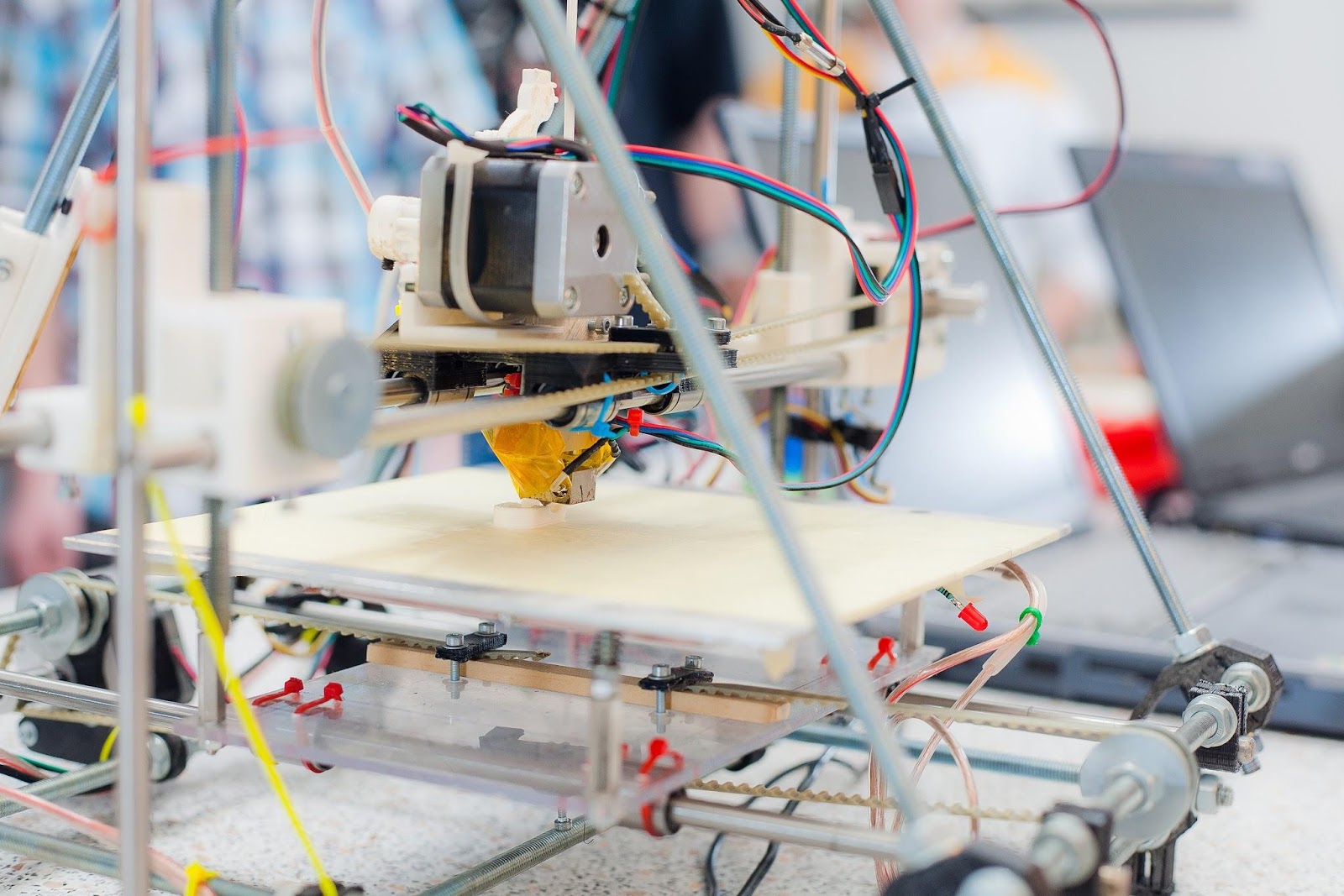
3D printing promises to give homeowners a way to design customized items for their home, from replacement parts to accessories, to much more. The technology is already available for many applications and has already been rolled out in some home improvement centres. 


With the rise of 3D printing, homeowners’ redesign ideas are as boundless as their imagination. Not only is this technology completely customizable, it’s also incredibly affordable, making most improvements accessible on any budget. That’s why the folks at Home Improvement Leads are excited to see that the future of home renovation projects is all about doing it yourself and empowering homeowners to have more control over their homes.

Replacement Parts

Things break or get lost, and it’s just a part of life. But it’s frustrating to find the perfect replacement piece, especially for antique hardware or discontinued appliances. Many of these items, though, can now be designed and manufactured at home, allowing home improvement projects to be completed faster and less expensively.

3D Printed Vase


Personalized Accessories

You can tell a lot about a person by their home, which is why homeowners dedicate so much thought, time, and money into creating their dream space. 3D printing now gives homeowners the opportunity to easily do just that. With the use of a 3D printing pen, anyone can build an abstract art piece for their wall or a monogrammed picture frame for their wedding photo. Home accessories don’t end there, though! Anything from T-Rex showerheads to R2D2 drawer pulls are possible, making it that much easier for a homeowner to put their own personal touches on their home that were simply unattainable in years past.


Related articles

Professional Guidance

Home improvement stores have caught on to this trend and are looking for ways to meet their customers’ new demands. Lowe's Innovation Labs are fantastic for those homeowners who want to personalize their space, but don’t have the knowledge base or materials to do so on their own. With the touch of a screen, someone can manufacture customized door knobs, address plates, light switch plates, and more. Once these mock ups have been 3D printed, they are shipped off to a manufacturer who constructs them in whatever material the homeowner has chosen.


Open Source Design Plans

For those who are less creatively inclined, coming up with home improvement ideas can be daunting. Thanks to open source technology sites like Thingiverse, though, anyone can find plans for home accessories, furniture, and more that can be 3D printed at a local store.

Many in the industry think that in the not too distant future, entire homes will be manufactured solely by 3D printed materials. Until that day arrives, there is plenty that a homeowner can do to personalize their space with the help of this amazing technology.


By Courtni Wisenbaker-ScheelEmbed


Author Bio - Courtni Wisenbaker-Scheel is a freelance writer, mother of two, a lover of all things Danish modern and a 3D printing enthusiast.

Friday, February 27, 2015

Amazon Plans to Create 3D Printing Delivery Trucks: a Wild Idea or Stroke of Genius?

3D Printing
A patent has surfaced showing Amazon's plans to create 3D printing delivery trucks that actually print products in the truck on the way to be delivered. The document shows just how far the company is willing to go to speed up delivery times.


Amazon has announced many ambitious projects in the past year, most of which have gained substantial attention and buzz. The projects getting most of the press coverage are the internet giant's proposal to use drones to deliver products and making a number of TV pilots, but very recently, another project was announced informally through a new patent that Amazon filed. So far, it is believed that Amazon plans to create (and patent) 3D-printing delivery trucks. Is this a wild idea, or a stroke of genius?

Entering the Industry

The patent, called "Providing Services Related to Item Delivery via 3D Manufacturing on Demand”, is essentially an effort to deliver 3D printed items manufactured on a truck to customers who ordered any given printed item. 3D printing, also known as additive manufacturing, is a process in which three dimensional objects can be printed from a CAD (computer aided design) file. Being a newly commercial and disruptive technology, it makes sense that a diversified company such as Amazon wants to get into the industry.

The Plan

It should be made clear that the 3D printing trucks that Amazon is proposing will double as delivery trucks. The patent lays out a sequential series of steps in regards to how this process will likely happen: first, a customer places an authorized order, the 3D printable order is sent to the manufacturing and delivery truck that is most proximal to the customer, and the item is produced en route and delivered once complete.

Related articles
The patent also covers subtractive printing, which is the process of taking a block of material and removing chunks in order to obtain any given shape remains. It also appears as if Amazon will work with metal machining via CNC equipment, rather than just plastic.

Will this Truly Lead to Better Logistics and Customer Service?

There is speculation that 3D printed items may be manufactured and sent to customers without them even ordering them—Amazon has stated a desire to do this with other items based upon one's search history. In addition to trying to expedite the delivery process, Amazon is also doing this to save valuable warehouse space. In addition to being delivered, an individual could pick up an item from an Amazon Locker. This service could be used for both recreational items and needs. Amazon provided the example of a faucet handle being broken, and ordering a new 3D printed one seamlessly through a smartphone.

It is hard to know when this service may come to fruition. The patent was filed with the Patent and Trademark Office in late 2013, but the application was published just now. Amazon has declined to comment on the matter to news sources, so they might try to keep it under wraps for a little longer.

Although the technology is there, it would take a lot to get this service up and running. Only time will prove the validity and success of this wild idea, and as time passes, this allows other companies the opportunity to jump on the 3D printing and delivery idea. Whether or not Amazon has competition in this endeavor, they will have plenty of work ahead of them to bring this idea to fruition.

The information for this article was provided by the professionals at 99 Truck Parts & Industrial Equipment Ltd., who provide truck parts in Langley.


By Dixie Somers
Embed

Monday, December 29, 2014

The Evolution of Learning Technology

 Education
Education has and will continue to evolve and change as we develop new relationships with ourselves and our technology. Explore the latest infographic from Open Colleges that tracks the past and future of learning technology.


From Egyptian hieroglyphs. to the pencil, to the  use of computers and smartphones in the classroom, education and the tools of teaching have evolved over the centuries.
Related articles

Explore some of these changes in this interactive infographic from Open Colleges.

Man-machine future in education

The infographic also explores the future of education, including the use of robots, 3D printers and the use of brain implants.


The Evolution of Learning Technologies

SOURCE  Open Colleges

By 33rd SquareEmbed

Tuesday, November 4, 2014

The Most Advanced Technologies of 2014

 Robotics
2014 has been a busy year for robotics development.  Here are a few outstanding robotics research initiatives that have made news this year so far.


With Google setting the trend for robotics-to-go mainstream, with its self-navigating cars, Google Glass eyewear, and more, new robotic inventions using cutting edge technology are now on the rise worldwide in a variety of places. Some of these inventions might even be making it into our daily lives in the near future. Here are a few outstanding developments that have made news in 2014.


Flying Robots

These days flying robots could come to the rescue if you are stuck in the mountains while on your trek! Scientists from the University of Twente are working on creating these robots as part of the SHERPA project to save human lives. These robots work in conjunction with ground rover robots and rescue workers to locate and rescue humans who might have been trapped in difficult situations and are seeking help.

Mind Controlled Prosthetics

In a revolutionary research, scientists from Chalmers University of Technology and Sahlgrenska University Hospital have used osseointegration technique to anchor a prosthetic arm to the bone. The neuromuscular electrodes connect the nerves and muscle, translating the sensory feedback into arm motion. It uses a mixture of materials from Advantage Manufacturing Ltd metal to synthetic plastics. This is the first ever technology that creates a fusion between an artificial limb and neural system, making it promising to help restore the arm and motor control.

Robotic Tree

Robotic Tree

Robotic technology is even used to grow trees! In a research funded by the European Union, scientists have grown a PLANTOID prototype in which the 3D printed trunk grows based on the sensory information received from the leaves. This research could pave the way for new ways to explore space such as digging themselves up, and sensing the environment in alien worlds under extremely harsh conditions.

Brain Surgery Through Robotics

Related articles
In a breakthrough research on brain surgery, Vanderbilt engineers have created a robot to operate the brain that enters through the cheek instead of the skull in an MRI scanner, making the process less invasive, and much safer. The device features tiny needles of the magnitude of 1 mm that can move along a curved path, ideally suitable for brain surgery. To keep the prices low, they have used 3D printing technology.

Disaster Recovery

A team of researchers from the University of Guadalajara in Mexico has developed a robot that uses computer vision and neural network to recognize human patterns such as fingerprints, faces, voice, and DNA matching, which can help to identify humans during disaster situations. The system is capable of self-learning, and can automatically classify different objects and human shapes, so there could be greater uses of this system.

The robotic field undergoing a revolutionary transformation, and one could expect to see a plethora of devices flooding the market in the coming days that could help the mankind. The demand for 3D printers and Aluminum fabrication could also be on the rise to produce robotic devices, which could open up a whole new manufacturing opportunity.


By Brooke ChaplanEmbed


Author Bio - Brooke Chaplan is a freelance writer and recent graduate of New Mexico University where she studied journalism. She loves to hike, bike, run and explore around her home in Los Lunas, New Mexico. She also enjoys blogging about health, fitness, fashion and many other topics.

Wednesday, September 3, 2014


 3D Printing
A new video from Shapeways shows how artists, designers and crafts workers turn ideas into marketed products with astounding imagination using the power of 3D printing.


Still for many, 3D printing is like something out of a science fiction book. At the technology's core, 3D printing creates objects by building up successive layers of material.

"It's like magic, being able to take things that only exist on screens and turning them into real objects that you can hold."


"It's like magic," designer David Lobser says. "being able to take things that only exist on screens and turning them into real objects that you can hold."

3D printing, or rapid prototyping as it is also known already has had an enormous impact on traditional manufacturing practices.  Design engineers, industrial designers and marketing teams rely on the technology for design verification, fit testing, ergonomic testing, and so much more.  Now, with service bureaus like Shapeways, and inexpensive desktop 3D printers like the Solidoodle, the technolgy is extending into new applications, and being opened up to everyone.

3d prints


The video above produced by Shapeways, brings you behind the scenes, so you can see how 3D printed products are made by industrial 3D printers.

They highlight some of the most popular materials such as sandstone, strong flexible plastics, cast metals and frosted ultra-detail plastic, that are currently printed.

industrial 3d printers

Related articles

"The goal of this video is to help designers better understand the end-to-end process," states Shapeways team lead, Jill.  She goes on to say that having users understand the 3D printing systems used, they can produce better parts and help the community grow.


SOURCE  Shapeways

By 33rd SquareEmbed