bloc 33rd Square Business Tools - wearables 33rd Square Business Tools: wearables - All Post
Showing posts with label wearables. Show all posts

Thursday, June 1, 2017

Upward Developments: How Technology Keeps Advancing & Improving Our Health


Medical Technology  

As research and testing is carried out around the world, healthcare is one of the industries that's always at the forefront of emerging technologies.


New techniques, evolving IT systems, and cutting-edge equipment are being integrated into healthcare systems that are advancing patient care more rapidly than ever. Here are just some of the ways that new technology is improving our health.

Related articles

Wearable Technology

A growing range of wearable devices is helping to improve patient care. Outside the hospital, individuals with serious medical conditions can be outfitted with wearables that monitor glucose levels, blood pressure, and more. With Wi-Fi technology, these devices provide an automatically downloaded record of patient care to healthcare computers. They can also issue alerts or medication reminders when readings fall below acceptable levels. Even home health patients remain connected for fast response in emergencies.
3D Printers

Since the arrival of 3D printing, healthcare researchers have been devoted to creating biologic materials that can be applied in the additive form of manufacturing. Using stem cells and incubation techniques, medical professionals are already reproducing a number of cell types that can be used to grow living tissue. This is gradually making it possible to recreate a patient's skin cells, blood vessels, muscle, cartilage, bones, and even heart tissue to custom specifications, and without the risk of rejection.

Analytics

These devices are part of the Internet of Things (IoT). Smart technology can monitor conditions and feed real-time data into information systems for analysis. Far beyond simply recording vital signs, facility sensors, cameras, bar codes, and microchips can track patients, staff, equipment, and supplies in a variety of ways, 24/7. Qualified professionals, such as those who may have their mba in computer information systems, can perform analyses to improve efficiency and reduce waste. This leads to not only better care, but lower costs that can be passed on to consumers.


Internal Sensors

It's also possible to aid diagnoses and treatments from the inside. Sensors that the patient can swallow have been around for several years now and are steadily improving. These small devices, no bigger than a large pill, can relay information on how various body systems are functioning, as well as the effects of medications on particular processes. They can be powered by the human metabolism itself to continue providing internal data that doctors otherwise couldn't get without extensive testing.

These technologies are becoming technical standards in patient care that combine to provide faster and more accurate results. More efficient diagnoses and treatments due to developing technology will save more lives.


By  Hannah WhittenlyEmbed

Author Bio - Hannah Whittenly is a freelance writer and mother of two from Sacramento, California.


Tuesday, February 7, 2017

Four Ways to Boost Online Sales


Business  

Online sales are on the verge of overtaking purchases for products and services done without the aid of information technology. Using technology and engagement are a sure way to boost your bottom line.


In today’s world, the internet is the marketplace. Online sales are poised to surpass purchases for products and services done without the aid of information technology. According to the data, sales transacted online will reach a massive $523 billion in the US by the year 2020.

However, despite the fact that the internet is taking over the business landscape, many companies still fail when trying to market their products or services to an online audience. E-commerce is very different than operating a brick and mortar business. You need to keep this in mind. Here are three strategies you can use to boost your online sales for your ecommerce business.

Leverage Big Data and Wearable Tech

Big data is the collection of massive amounts of information in such high volume that previous computer hardware was not able to handle it. Addiction recovery centers across the United States are starting to implement new technology to help patients. Today, however, big data can be properly stored and later parsed by data analytics software to provide actionable intelligence for your business.

One way to collect big data that can help you boost sales is through the use of wearable tech. Wearable tech can tell you how customers are using your product and provide many other kinds of useful information. For example, smart glasses that are used to watch movies during a commute can collect information regarding a person’s entertainment preferences. This info can then be used by a company to advertise other related programs and entertainment products that consumer may be interested in. However, without big data, this information couldn’t be properly stored in high volume and acted upon for marketing purposes.

Related articles

Aim for Long Term Engagement

One thing you should really focus on as an online business is engagement. This is one of the keys to building loyal relationships with customers and developing steady revenue streams. Brick and mortar companies try to accomplish this through the use of things like customer loyalty programs. You can do the same through the use of integrated apps to help customers keep track of a point system or to even use those points to make purchases.

App integration should be an important part of any online marketing plan if your goal is high user engagement. According to statistics, use of smartphones and other mobile devices to connect to the web eclipsed PC and laptop internet use sometime in 2014. Mobile is now the way most people use the internet.

An email list is another excellent strategy for maintaining long term user engagement. It can allow you to implement suggestive selling based on a customer’s purchase history. Social media networks like Twitter and Facebook can allow you to communicate directly with customers in a way not possible through other means. Try to use a multitude of different tools to increase engagement.

Develop a Strong Internet Marketing Plan

E-commerce and internet marketing go hand in hand. If you develop an eCommerce site without putting a lot of thought into strategies to market that website on the net, you are probably wasting your time.

There are many tools and services on the net you can take advantage of. Google AdSense, for example, can help you obtain preferential treatment by the Google search engine so that users of Google find your website first instead of the websites of competitors. It can also help you keep track of what keywords and keyword phrases people use to find your website. This can help you refine your SEO and increase your inbound traffic from Google.

Another good choice you should consider is using email marketing agencies. These companies can help you develop a strong email based marketing plan to help you produce more conversions through email than you would otherwise. Such companies may have mailing lists for consumers likely to be interested in your product or service to help you generate far more leads than would be possible without such a service.

Integrate Offline Marketing

While internet marketing is certainly integral to the success of an eCommerce website, you should consider the fact that people are not connected 24/7. Offline marketing can also be a powerful tool to direct consumers to your website. It is true that traditional advertising mediums like print, radio and TV will be a lot more expensive than internet advertising options. However, the upside is they may reach far more people than an internet ad would. You also have the option of better targeting specific geographic areas by advertising in specific media markets.

Close to one third of brick and mortar retailers also sell their products online. If you have a brick and mortar location as well, certainly do your best to inform your store visitors about your website. One common strategy is to ask if customers want to sign up for your email list during checkout. Offering in-store coupons online is another great method to create strong crossover between your offline and online clientele.


By  Kevin FaberEmbed

Kevin Faber is the CEO of Silver Summit Capital. He graduated from UC Davis with a B.A. in Business/Managerial Economics. In his free time, Kevin is usually watching basketball or kicking back and reading a good book.


Monday, September 19, 2016

Wearables That Aren't Just for Your Wrist

Wearables  

Wearable gadgets have become one of the hottest trends, and with new developments coming out every month, it's easy to find an example that promises to change your life. Wearables mean a lot more than just smart watches though—here are a few examples.


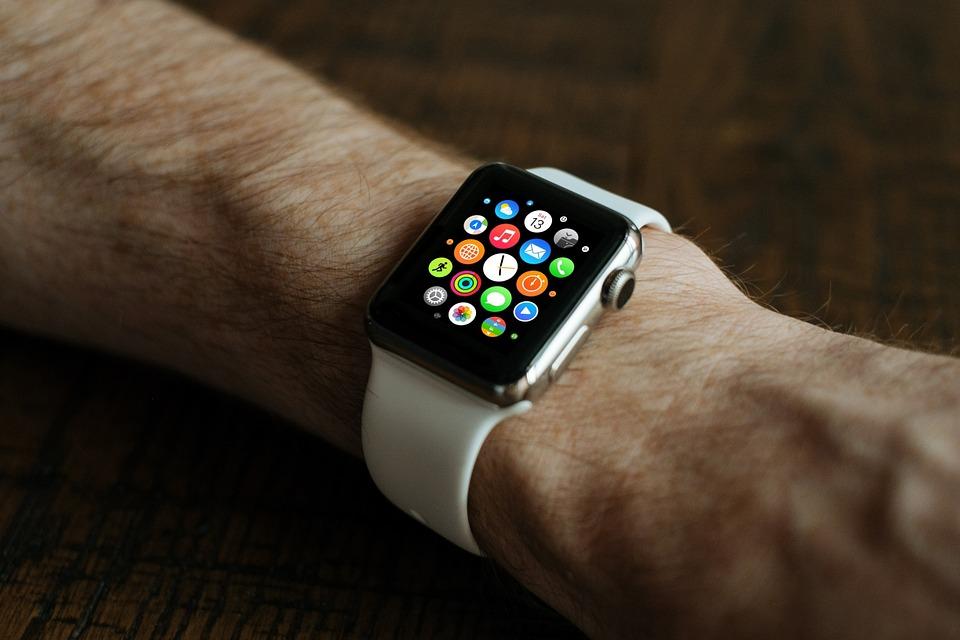
The Apple Watch has been one of Apple Inc.'s most popular items, with upwards of 12 million watches sold the first year it was available. Wearable technology has become one of the hottest trends, and with new developments coming out every month, it's easy to find the wearable tech that will enhance your life. And you don't even have to give up your wrist for it.

The Wearable Explosion


Apple Watch

Related articles
As wearable tech becomes more accessible and new markets are discovered, more companies are investing in developing technology and bringing new products to the public. If you're in the market for health-related technology, improving your athletic performance or organizing your calendar while keeping your hands free, wearable tech is just what you need.

One in six Americans owns and utilizes wearable tech and the market for them went over $2 billion in 2015. As 2016 continues, wearable tech is being seen in every city and every state, with the market reaching nearly $3 billion.


Moving Beyond Physical Health 


Wearables Beyond Physical Health

Health concerns can be addressed with wearable tech. A skin sensor that monitors UV light exposure will alert you to when it's time to come in out of the sun. A belt that encourages movement and increases daily activity will pair well with a pair of running shoes that tracks your distance, time and speed. Counting daily steps is a snap when your wearable tech not only reminds you it's time to move, but keeps track of your statistics.

Going beyond physical to mental health, wearable tech can address situations that cause some individuals to suffer panic attacks. In-ear audio systems that can be adjusted to filter out loud or sharp noises in public will allow people who suffer from anxiety disorders to go about their day freely. Muting background noises and making it easier to hear a conversation reduces social anxiety, letting you participate in a social activity without fear.

Consumers want wearable tech to fulfill their needs, such as exercise assistance, tracking medical information and providing dietary guidance. Form-enhancing yoga bottoms that provide vibrations to guide you into the right form and posture. Combining wearable tech with apps that track and translate the data for consumers makes wearable tech part of daily life.


Wearable’s Enter the VR Market 


Wearable’s Enter the VR Market

For business productivity, wearable tech is invaluable. Google Glass was the first, but virtual reality (VR) and accessible heads up display (HUD) are combining to give people access to information wherever they need it. Accessing client information in the middle of a meeting, checking email while walking to a business lunch and updating records on the go are all possible thanks to wearable tech.

Just as smartphones reduced the distance between people, allowing rapid communication despite thousands of miles that may lie between two separate businesses, so wearable tech will improve that capability. Instead of leaving a meeting to confer with a colleague, a set of smart glasses can immediately contact someone across the globe and allow them to participate in business matters.

Wearable tech will do more than we can currently imagine, much as telephones, television and automobiles have done throughout the years. Changes in technology create new opportunities for people to find ways to improve the quality of life, and the possibilities that wearable tech offer are endless. Smartphones and mobile access outranks desktop usage now; wearable tech will outpace smartphones as technology improves, bringing new ways to stay connected. Fashionable USB drives, smart watches, VR glasses, in-ear audio systems and athletic clothing that monitors your vital signs are all available now. Just as cellular phones shrank in size and improved in performance, so will wearable tech move from your wrist to your entire body.


By  Lindsey PattersonEmbed

Author Bio - Lindsey is a freelance writer specializing in business and consumer technology.


Thursday, August 25, 2016


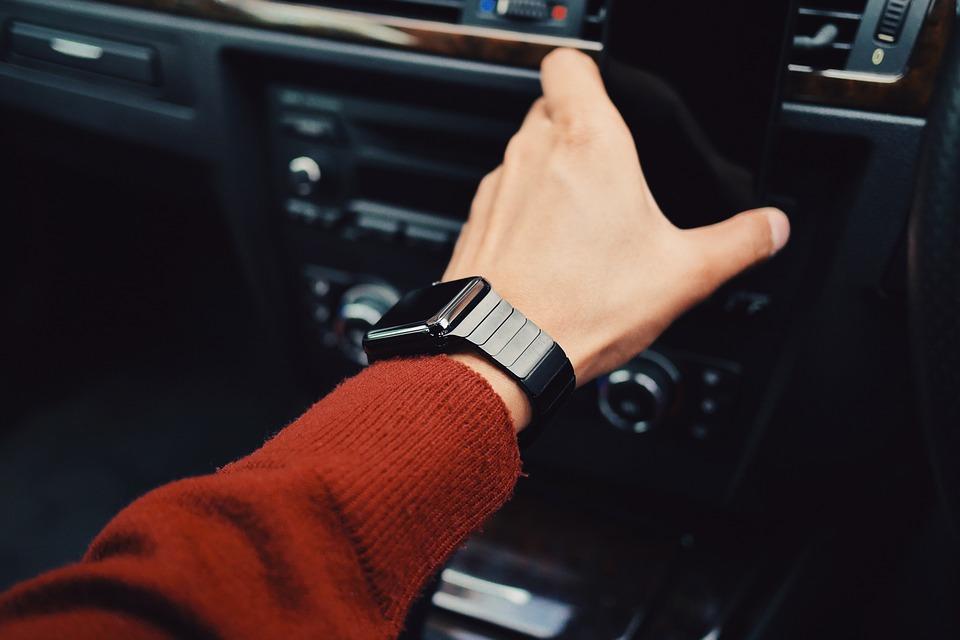
Automotive Companies Investing in Wearable Tech Pilot Programs

Wearables  

Automakers are starting to look at the possibilities, and challenges, of wearable technology. This industry is set to explode, and car makers from Ford to Tesla are looking for a piece of the action.


Wearable technology is quietly having an increasing impact on our lives. It's estimated that by 2018 wearable products will be a $19 billion industry. So far the focus seems to be on gaming and healthcare, but automakers have also taken a good look at the possibilities, and challenges, of wearable technology.

Production


Production

In 2015, the German car maker Volkswagen distributed smart glasses to volunteer warehouse employees. These smart glasses allow the workers to view the information they need to do their jobs right in their field of vision. Integrated with other systems, the smart glasses are able to display essential order information such as part numbers and locations. The device, which includes a camera used as bar code scanner, is controlled via touch and spoken commands for hands-free operation. VW will weigh feedback before expanding the program.

As of 2014 Ford was reportedly experimenting with Virtual Reality in its design labs. Engineers used an Oculus Rift to evaluate designs in a completely digital environment. A camera system captured images of new vehicles which could allow a team of remote engineers to examine the new designs from multiple angles. This way, selected teams from across various plants could get together to explore and discuss new design ideas. Since then, they've opened a lab in Dearborn, Michigan, dedicated to the virtual reality experience and its uses.


General Motors purchased a number of Google Glasses to use on production lines at a Detroit assembly plant. Essential responsibilities from quality control and repairs to job training can take advantage of VR informatics with the hope of improving efficiency. Among it's other motivations, GM hopes that implementing VR will attract a younger and more tech-savvy workforce.

It's not a novel concept; a mid-2014 study found that VR tools improved worker productivity by 8%.

Marketing


microsoft building


The Swedish carmaker Volvo has joined with Microsoft to explore ways of using the HoloLens VR headset to market their automobiles. Virtual reality will allow potential customers to examine virtual models and design innovations. They can also view information on important features and specifications as well as the effect of color and trim changes. It's hoped that this will become the auto showroom of the future which car shoppers can access digitally. Volvo has also talked about using the headsets to obtain customer feedback on models still in the design stage.

Both AUDI and AMARI Supercars have announced plans for similar virtual showrooms.

Safety


road safety

Ford is also looking for a way to integrate the increasingly popular smartwatches and other fitness wearables into their cars' electronics to enhance the driving experience. Linking health data such as heart rate to driver assist software could make the car easier to manage in the case of a health emergency. It's also hoped that information on accidents and other traffic problems could be transmitted straight to driver smartwatches. Ford has its own MyFord Mobile smartwatch app capable of receiving voice command. With such advantages the price of a car insurance policy is likely to drop.

Related articles
Toyota partnered with Oculus to create a driver training program for inexperienced or problem drivers which uses VR to teach proper driving etiquette and behavior. The trainee doesn't even have to drive; it can all take place over the device in a virtual environment.

Other manufacturers like Tesla, Mercedes, and Hyundai have developed or are planning smartwatch apps to integrate with their vehicles and provide useful features for improving driver experience. Connectivity to a global internet service could invoke new approaches to GPS locationing and voice-command web browsing. Smarter driving could reduce the staggering 1.3 million people who die in auto accidents each year.

Wearable devices that give us better interaction with our vehicles may save lives. Add in benefits to both production and marketing, and it's very likely that within a few years the automotive experience will change forever.


By Lindsey PattersonEmbed


Author Bio - Lindsey is a freelance writer specializing in business and consumer technology.


Saturday, January 16, 2016

Power Harvesting Sensor Can Use Your Body As a Battery


Wearable Tech  

Researchers have developed a prototype of a wireless sensor patch that can monitor your hydration levels and send data to your phone, and it gets all the power it needs from your own body heat.


Wearable technology is becoming more of a reality everyday.  One of the big limitations remains how to power these tiny devices efficiently and for extended periods of use. At the Consumer Electronics Show (CES) recently a prototype of a wireless sensor patch that can monitor your body's hydration levels and send data to your phone was shown off.  The device gets all the power it needs just from body heat.

Any kind of energy gradient can potentially be used as a power source, and typically your body provides its own energy gradient by being warmer than the ambient air. Thermoelectric materials can leverage this, turning the temperature difference directly into useful amounts of electricity.

Related articles
Researchers at North Carolina State University’s Center for Advanced Self-Powered Systems of Integrated Sensors (ASSIST) have been developing flexible thermoelectric generator (TEG) power-harvesting wearables, like the sensor.

The small, flexible sticker can produce between 40 and 50 microwatts of electricity per square centimeter as long as it's stuck to your skin. This is due to the array of flexible TEGs wired in series. The amount of power is based on the temperature difference between your skin and the air; the 40-50 microwatt per cm2 output range comes from a difference of just 3 degrees Celsius—with no heatsink or airflow across the generator. If you add airflow into the mix (say, if you're walking or jogging), the generator is much more efficient, producing around three times as much power.

Such a wearable patch is never going to produce enough energy to run a display or power a smart phone or anything like that, however it is capable of running a low power processor along with sensors such as accelerometers, an EKG monitor, temperature sensors, pressure sensors, or hydration monitors.

The researchers are developing an ultra low-power Bluetooth standard for data communication, allowing the patch to talk to your phone. This kind of feature is what differentiates ASSIST's wearable sensors from some of the other wearable sensors we saw at CES. Because the sensor has all the power it needs, it can provide data without you having to interact with it at all.

The developers aim to create small self-powered wearable sensors that can last for up to a year. They are also looking for an industry partner to license the tech for mass production.

SOURCE  IEEE Spectrum


By 33rd SquareEmbed


Saturday, January 9, 2016

Programming for Wearable—The Present and the Foreseeable Future


Technology  

The wearable technology ecosystem is still in a very early stage. The design and technological challenges of bringing technology closer and closer to our bodies is considerable. Here are some of the main challenges of what may one day soon be the main interfaces we use.


When it comes to adopting new technologies, the world has always been curious, hesitant to wait and then, ready to break into new trends. In less than a few decades, we have seen so much transition in technology migration and adoption that it boggles the mind how things are changing. First, cluttered and bulky PCs evolved into space-saving and lightweight desktop devices. As the trend gradually went on, we have seen the development of all-in-one Personal Computer, and then handheld devices including smartphones. Technology enthusiasts, and early adopters are quick to migrate to new devices, even with the expectations that not all will succeed in becoming widely used.

One unique and relatively new trend that is doing the rounds these days is wearable technology. When we refer to the term wearables, we mean to say smart watches, health tracking devices, and even the new age social technologies.

What is Programming for Wearable?

Developers and programmers are innovating newer ways to come up with improved mechanisms and output to develop wearable tech. When programming for wearable is mentioned, it refers to the innovation, ideas, and techniques used to make the devices better.

Challenges for Wearable Programmers:

  • Tiny screens are not ideal for many applications 
  • The audience interactivity feature is not fully functional 
  • Adopting new apps in a seamless manner can be very difficult 
  • Issuing notifications while actually giving users more ways to use the device is a challenge 
  • Hardware fragmentation - which device/brand should development teams focus on for maximum results? 
  • Battery life issues with small size constraints

At present, we have a good number of companies working around in developing effortless and easy to use wearables: Pebble, Apple, Sony and others are developing what they mean their version of the technology segment. Today no single company or wearable subset has emerged as the leading system.

Why Wearable Tech is Trying to be Adaptive?


Related articles
People have always been, as noted above, ready to try out new technologies. Wearable technology is still such a new paradigm though that the use cases and market segmentation are far from being fully developed. Although the wearable; particularly smart watch segment is scaling in popularity, but there are some reasons why the industry is still struggling to form a definite product space.

There are some vital reasons why wearable technology today is in this state. There is scarcity of cross platform development, a lack of helpful apps, and the inherent hardware technology issues of screen size, battery life, etc., are hurdles that need to be overcome.

What does the Future hold?

It would be wrong to say that wearable is at their peak of development. We are clearly in the infancy of this technology, and will see many more victims than successes in the coming years. Google Glass is one such early development that seemed to hold a lot of promise, but hasn’t lived up to the early hype. The jury is still out on Apple Watch.

The introduction of applications, development, and programming bits are falling into place though, and that the industry is well on its way. As more innovative measures are introduced and the community development is done, the industry will soon become to be popular. There are speculations that the industry will rise and a day will come when it will surpass all other contemporary devices, but for that we need to wait while enjoying the speed of development.


By Vaishnavi AgrawalEmbed


About the Author: Vaishnavi Agrawal loves pursuing excellence through writing and have a passion for technology. She has successfully managed and run personal technology magazines and websites. She currently writes for Intellipaat , a global training company that provides e-learning and professional certification training.The courses offered by Intellipaat address the unique needs of working professionals. She is based out of Bangalore and has an experience of 5 years in the field of content writing and blogging. Her work has been published on various sites related to Hadoop, Big Data, Openstack Training, Business Intelligence, Cloud Computing, IT, SAP, Project Management and more.

Tuesday, January 5, 2016

New Battery Tech Might Double Your Phone's Life


Batteries  

Hitachi has announced that it has developed a new lithium-ion rechargeable battery with an energy density twice as high as that of the company's existing product.


I think we can all agree modern smartphones are incredibly convenient. They allow us to remain connected to the Internet no matter where we are, and that brings a whole host of features and options. Of course, there’s one significant drawback to this. The more powerful and connected our phones get, the shorter the battery life gets.

It makes sense, after all, because even with larger-capacity batteries in a smartphone, it won’t last any longer if you’re constantly using your device. Sure, when in standby mode most phones can last for days, but let’s be realistic. How many of us actually leave our phones alone for that long?

We need better battery technology, that much is certain.

That’s why new technology from Hitachi Maxell could revolutionize the mobile industry. It developed a new type of lithium-ion battery that has twice the capacity of current tech, and yet it’s no thicker. In short, it means the new tech could double the life of the average smartphone without any significant drawbacks, such as making a device thicker in size.


Introducing Hitachi Maxell’s ULSiON Battery Tech

The new technology has been coined ULSiON, and it will allow Hitachi to create mobile batteries that are small and thin yet offer exceptional capacity.

“We will realize compact lithium-ion batteries that have a width of 13mm or less and an energy density twice as high as that of the existing product of the same size,” says Hitachi.


How does it work?

The new technology employs a composite material, which is generated when the silicon-based layer of an electrode is coated with carbon. Usually negative electrode layers made of silicon materials will expand and contract, which is what causes the overall size of the battery to grow or swell. The new technology from Hitachi, however, reduces that pattern by employing much finer silicon particles that are less likely to expand or contract.

Related articles

No Impact on Design

The result is that smartphone manufacturers could create devices that have much longer battery lives, without sacrificing minimal design. This is good news indeed, as batteries for high-drain devices tend to be larger in size, which is why you often see more powerful smartphones with less battery life. This is because manufacturers opted to keep the form factor smaller and thinner, instead of equipping a higher-capacity battery.

Where this technology could benefit most is the wearable tech market, where devices need to be ultra-thin and reasonable in size. No one wants to wear a brick on their wrist or around their neck, so manufacturers are struggling to offer wearables with decent battery life.

Hitachi’s new technology could allow it to offer smartwatches and fitness trackers that stay charged a week or more at a time. This is one of the biggest hurdles with wearable tech currently, as most smartwatches require you to charge them every night or every other night, which can definitely get ridiculous.


Bigger Phones, Bigger Drains

Plus, smartphone manufacturers have been slowly increasing display sizes over the years. These days, it’s not uncommon to see a 5-inch or larger display on new smartphones, which can certainly increase the load on the battery. It seems crazy that while devices are growing in size — phablets are incredibly popular these days — the general battery life tends to be decreasing.

Hitachi’s new technology will certainly change the market for the better, provided it can mass produce it. The company is set to demo the new technology to the public at the 2nd Wearable Expo in Tokyo, Japan, taking place from January 13 to 15.


By Kayla MatthewsEmbed


Author Bio - Kayla Matthews is a technology journalist and blogger, as well as editor of ProductivityBytes.com. Follow Kayla on Facebook and Twitter to read all of her latest posts. 

Tuesday, December 1, 2015

Researchers Developing Wearable Cognitive Assistant


Digital Assistant  

Gabriel, a project by researchers is a personal cognitive assistant that “whispers” instructions into a user’s ear, for things like how to change a tire, perform CPR, or even assemble furniture.


Scientists at at Carnegie Mellon University are building a computer system called Gabriel that, like the angel that is its namesake, will seem to look over a person's shoulder and whisper instructions for tasks as varied as repairing industrial equipment, resuscitating a patient or assembling flat-pack furniture.

CMU has been awarded a National Science Foundation four-year, $2.8 million grant to further develop the wearable cognitive assistance system. Gabriel uses a wearable vision system, such as Google Glass, and taps into the ubiquitous power of cloud computing via a CMU innovation called a "cloudlet."

"Ten years ago, people thought of this as science fiction, but now it's on the verge of reality."
"Ten years ago, people thought of this as science fiction," said Mahadev Satyanarayanan, professor of computer science and the principal investigator for Gabriel. "But now it's on the verge of reality."

In just the past year, Satyanarayanan and his colleagues have built proof-of-concept implementations that guide the assembly of LEGO models, teach freehand sketching and coach a neophyte Ping-Pong player.


Related articles
"The experience is much like a driver using a GPS navigation system," Satyanarayanan said. "It gives you instructions when you need them, corrects you when you make a mistake and, most of the time, shuts up so it doesn't bug you."

Wearable digital assistants are only now becoming possible because of recent advances in several key areas of hardware, software and computation. Satyanarayanan said rapid advances in computer vision are making it possible for computers to recognize objects and understand the context of scenes. Cognitive algorithms, such as IBM's Watson, make it possible for computers to direct tasks and cloud computing makes it possible to perform the intensive computation to run such algorithms.

The speed and agility necessary for these applications are made possible for Gabriel by cloudlets — data centers that provide some of the computational power of the cloud and that support multiple mobile users that were first developed by Satyanarayanan. Cloudlets were first implemented by his research group, and are situated close to users, such as on cell towers or in office buildings, so that they are just one wireless "hop" away.

By "bringing the cloud closer," cloudlets reduce the roundtrip time of communications from the 70 milliseconds typical of cloud computing to just a few tens of milliseconds, or less. That enables Gabriel to work in real-time, such as a Ping-Pong coach app that instructs a player to hit the ball to the right or the left on each return, depending on the location of the opposing player (see video below).

In the future, the researchers will be focusing on the fundamental technologies necessary to make wearable cognitive assistants, such as further improvements in computer vision and the incorporation of audio and location sensing. The initial applications will be for tasks that require specialized knowledge or skills, but ultimately cognitive assistance could be applied to virtually all facets of everyday life.


SOURCE  Carnegie Mellon University


By 33rd SquareEmbed


Tuesday, June 9, 2015

Google's New Interface Technology Looks To Make Touching Glass Obsolete


 Interfaces  
Google's Project Soli is a new interaction technology that uses radar sensors that can accurately track sub-millimeter motions at high speed. It fits onto a chip, can be produced at scale and built into small devices and everyday objects.


Google’s Project Soli could make touching your Gorilla Glass wrapped device seem like using a rotary dial telephone does to us today. With the ability to track minute hand and and finger movements, all in a tiny sensor, Soli seems ideal for interacting with the plethora of ever-smaller devices and screens.

"The hand can both embody a virtual tool, and it can also be acting on that virtual tool at the same time."


Based on the video below, from Google Advanced Technologies Products (ATAP) group, the technology could be even more accurate and minutely precise than Leap Motion's system.

"The hand can both embody a virtual tool, and it can also be acting on that virtual tool at the same time," says Project Soli Design Lead, Carsten Schwesig.

Soli allows users to control devices using natural hand motions, including incredibly fine motions accurately and precisely.  Because it is a radar device, the sensor can even work through materials like a table or cloth.

Haptic feedback is also part of the interaction, with your hand naturally touching itself. Soli uses your hand as its own user interface for gesture like turning a knob, or scrolling between your thumb and forefinger on an invisible, virtual device.

"Radar gas some unique properties when compared to cameras for example," says Emre Karagozler, a hardware engineer with Project Soli. "It has very high positional accuracy, which means that you can sense the tiniest motions."

Soli may be ideal for small devices, like smartwatches and other wearables, especially since it works through surfaces and at a distance.

Project Soli

Related articles
A key development of making Soli was the push to make the hardware smaller and faster

The tiny interaction sensor runs at 60GHz and can capture motions of your fingers at resolutions and speeds that haven’t been possible before—up to 10,000 frames per second. To get there, the team had to reinterpret traditional radar, which bounces a signal from an object and provides a single return ping.

To capture the complexity of hand movements at close range, Soli illuminates the whole hand with a broad radar beam, and estimates the hand configuration by analyzing changes in the returned signal over time.

Soli is being targeted for broad availability soon, in a form factor suitable for incorporation into wearable devices like smartwatches. By the end of this year your next smartphone could have this new interface technology.


SOURCE  TechCrunch

By 33rd SquareEmbed

Tuesday, May 26, 2015

How Human-Computer Interfaces Are Already Improving Human Life


 Gadgets  
Human-computer interfaces, in the form of wearable tech and assistance for the disabled especially, are already improving everyday life. Here are a few examples.


Mankind has dreamed of the fusion of man and machine since as early as the 19th Century, with Edgar Allan Poe’s short story "The Man That Was Used Up" detailing a cyborg-like individual relying on mechanical prostheses. Speculative fiction has long discussed the possibilities of human-machine interface taking the form of a single entity, one which can achieve more than either component would on its own, for the benefit of human life. While we’re not quite at the point where nanobot-controlled organs and telepathic internet access are available to us, humanity is currently using several extant technologies to improve everyday life.

Related articles

Assistance for the Disabled

One of the best side-effects of mobile tech development has been the application of these commercial devices to assisting the blind and visually-impaired. Smartphones and other wearables (notably, smartwatches) are being used to sense depth via stereovision. This works by the wearing of two camera-equipped mobile devices, with both cameras pointed in the same direction, and having them send depth information to the user. This can be a viable technological alternative to traditional assistance tools, like canes and guide dogs.

Researchers are looking into further assistive uses for mobile technology in everything from guide robots for the visually impaired and remote-controlled camera feeds that allow the wheelchair-bound to experience more of the world than would otherwise be possible.


Industrial Applications

Industrial work is also benefiting from human-machine interface developments. Touch panels, like those offered by Coast Automation, provide their users with fast and simple computer access. Visual panels, used in production, offer machine operators to interact with the machine in a visual and user-friendly way. This can not only improves the efficiency of the operator but also the quality of the work produced.

Wearable Communication

There are few who would argue that mobile technology hasn’t revolutionized communications. Wearable devices take this innovation a step, further, enabling hands-free communication to take place almost anywhere. The experience of live, face-to-face conversation is preserved—if somewhat imperfectly, at present—by wearable technology. Current wearable devices, like Google Glass and different variations on the SmartWatch, have already become quite popular with consumers.

Ensuring one’s own physical safety has also been made easier with the rise of wearable tech in the form of jewelry. Some of these fashionable pieces can be programmed to alert a predetermined emergency contact at the push of a discreet button. For those who deal with the threat of physical harm on a regular basis, this technology may prove to be a literal lifesaver.


By Emma SturgisEmbed

Author Bio - Emma is a freelance writer currently living in Boston, MA. She writes most often on education and technology. When not writing, she enjoys watching old movies and indoor rock climbing.


Thursday, January 22, 2015


 Augmented Reality  
In a real surprise, Microsoft has announced is getting into holograms, and have built working augmented reality hologram hardware, called HoloLens.


Microsoft surprised everyone yesterday during their preview of Windows 10 in Redmond.  Windows HoloLens is an augmented reality wearable computer that is different than Oculus Rift and Google Glass—the system adds holograms to the world users see. The HoloLens headset is described as "the most advanced holographic computer the world has ever seen."

No cords, no phones, no wires, no tethers.  HoloLens is a true wearable, and uses brand new technology built to process the holograms.

Through the device's transparent lens, users can see the physical world and advanced sensors map it so that you can interact with digital media and physical reality in new ways.

The HoloLens also has spatial 3D sound that lets users to hear holograms and built-in spatial sound lets them hear holograms wherever they are in the room with pinpoint precision.

As Google Glass Fades Away, Microsoft HoloLens Promises and Even More Sci Fi Near Future

"As holograms, your digital content will be as real as physical objects in the room. For the first time, holograms will become practical tools of daily life," Microsoft claims.

The device is powered by Windows 10, and will be "available in the Windows 10 timeframe."

HoloLens is a fully functional wearable computer, that is very likely to be close to what the much talked about start-up Magic Leap is developing.  The headset is in the form of glasses, but unlike Google Glass, these glasses map the world around you, and make 3D models appear in your vision—even tracking your hands and voice as they interact with those virtual objects. Microsoft calls this mixed reality.

Microsoft HoloLens Minecraft

According to Microsoft, HoloLens intelligently maps the room you’re in, blending holograms with the environment around you. With the device, you can pin holograms to physical locations you choose so that your room becomes the canvas for your holographic projects and games. Depending on which users were in a building, for instance, they might each see different digital hologram art on the walls, or interact with them completely differently.

Related articles
With HoloLens, users can drag content off the screens of their devices so that they appear to float in space. A floating 3D cursor is used to click the space in front of you, can then be used to control and interact with the digital asset.

HoloLens is the brainchild of Microsoft's Alex Kipman, who also help invent the Kinect. What Kipman has done is to strap the Kinect sensors to your head, so that your environment can be tracked and the data used in a personalized interactive environment. The prototypes users tested has a field of vision that spans 120 by 120 degrees, which is much greater than the original Kinect, and this allows for sensing of users' hands as well.

Microsoft HoloLens

The sensors flood the on-board computer, GPU and new, first-of-its-kind HPU (holographic processing unit) with terabytes of data every second. "This is everything that we need to step into the holographic landscape," Kipman said at the official unveiling. On the right side of the HoloLens, buttons allow users to adjust the volume and to control the contrast of the hologram. The device's electronics are vented out the sides, keeping the unit from feeling hot on users' heads.

Encompassing other Microsoft technologies, HoloLens is also integrating Skype calls, as was shown in a demonstration where a remote plumber helps a woman fix her sink.

"I don’t want to remove the headset, which has provided a glimpse of a combination of computing tools that make the unimaginable feel real."


In one of the demonstrations of the HoloLens, users can explore Mars with NASA scientist, Jeff Norris. "After exploring Mars, I don’t want to remove the headset, which has provided a glimpse of a combination of computing tools that make the unimaginable feel real," writes Jessi Hempel in Wired. NASA is also enthusiastic. Norris will showcase Project HoloLens this summer for agency scientists to use for collaborating on a mission.

Developers will be getting HoloLens this spring, and when that happens, we should expect some very interesting application ideas and models. As the video at the top of this post shows, developers are very excited about HoloLens (it is promotional content from Microsoft, but it is worth looking at.)


By 33rd SquareEmbed

Wednesday, January 14, 2015

Hyundai Demonstrates Wearable Technology and Augmented Reality System at CES

 Automotive  
Car maker, Hyundai introduced a number of conceptual technologies that this year's Consumer Electronics Show, including an augmented reality HUD and an app that will let you start your car from your smart watch.


A long with fuel efficiency, car makers are increasingly focusing on advancing vehicle technologies of the future, in response to consumer demand for increased in-car connectivity and mobile device integration. A lot of innovative products that have to do with in-vehicle infotainment and connectivity was showcased at the Consumer Electronics Show (CES) recently in Las Vegas, and Hyundai's augmented reality technology and wearables was definitely among the highlights at this year's show.

The South Korean car maker showcased a set of new technologies that aim to enhance integration of mobile devices into vehicles, as well as improve road safety through advanced systems that allow vehicles to communicate with each other, with the infrastructure, and with pedestrians.

On the connectivity front, Hyundai introduced the Android Wear app. With this new app, Hyundai wants to give drivers the opportunity to control various vehicle systems remotely. The app will be launched in a few months, and will be compatible with all Hyundai models that are equipped with the company's Blue Link system. It can be used either through a smartphone or an Android Wear watch. This app will allow drivers to remotely start or stop the car's engine, lock and unlock the car's doors, and flash the lights. Additionally, drivers will receive information about the car's location on their smartwatch in case they can't remember where they have parked it.

Android Wear Hyundai
Image Source - The Verge
Related articles
As far as safety is concerned, there is the Augmented Reality Heads-Up Display, which provides the driver and other vehicle occupants with navigation information, along with warnings of a potential collision. The augmented reality system will alert the driver in case there is a car or another moving object in the vehicle's blind spot, or if it detects that a forward collision is imminent, or that the vehicle is about to drift away from its lane. On top of that, the heads-up display will be connected to a wearable band, which will vibrate when the car starts drifting from its lane, and will also monitor the driver's heart rate, alerting emergency services if it detects a sudden heart rate changes.

While it will take some time before the augmented reality system is integrated into mass market vehicles, Hyundai's new advanced driver assistance systems, also demonstrated in Las Vegas, will be ready for production pretty soon. They include an automated parking feature, which allows a car to park on its own, without a human driver, as well as highway driving assist, automatic speed adjustment, and emergency stop. Another important aspect of the driver assistance system is the V-to-X connectivity, which enables interaction among vehicles, between vehicles and pedestrians, as well as between vehicles and infrastructure. These systems can prevent collisions with pedestrians, issue real-time traffic signal information, and share information on road conditions with other vehicles.

With all these innovative driver assistance and connectivity features, Hyundai may have stolen the spotlight at this year's Consumer Electronics Show, one largely be focused on in-car technology.


By Jordan PerchEmbed

Author Bio - Jordan Perch is an automotive fanatic and “safe driving” specialist. He is a writer for DMV.com, which is a collaborative community designed to help ease the stress and annoyance of “dealing with the DMV”


TBI & TNI - tableaux interactifs mobiles et fixes