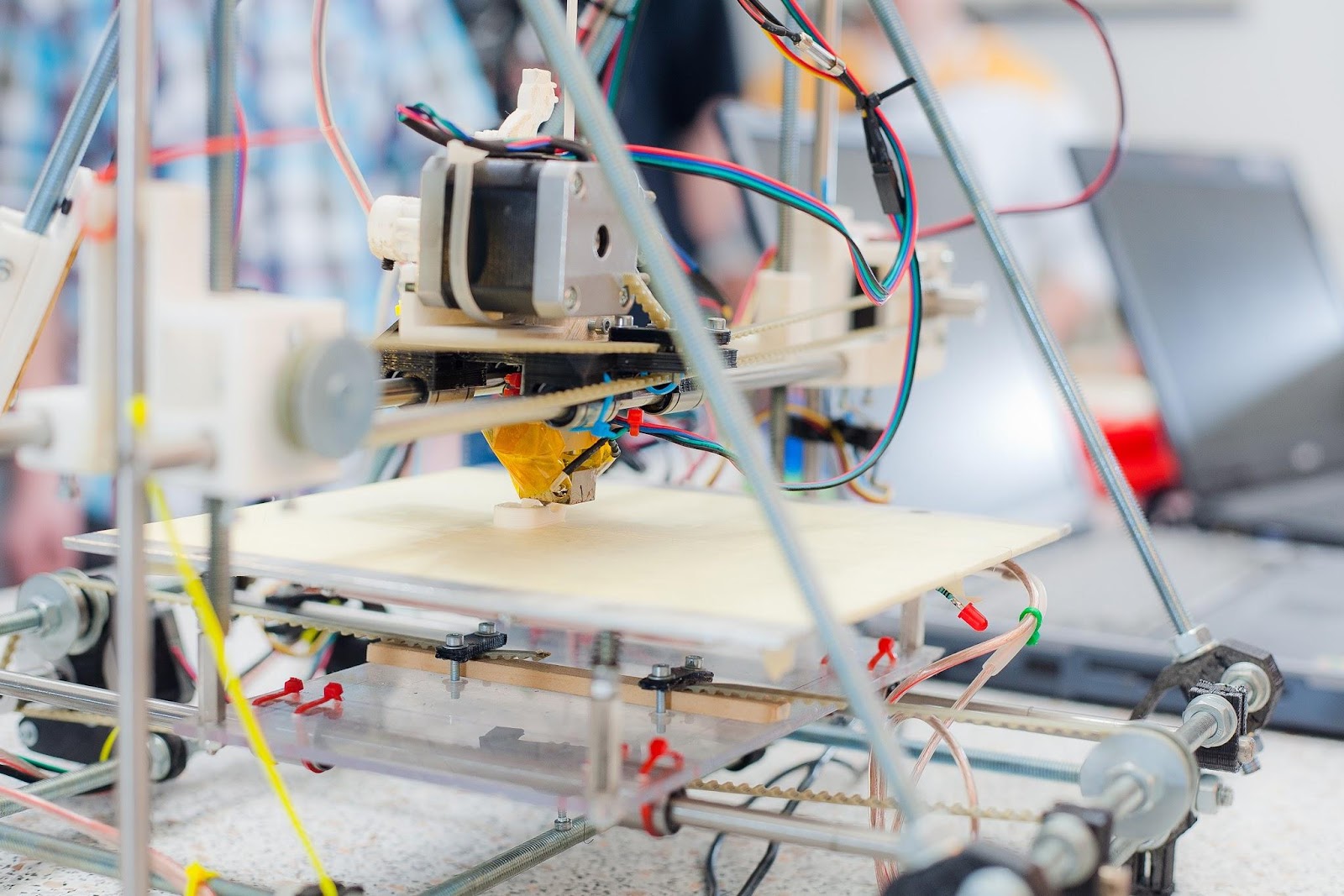
The world of modern business and the technology it uses are in a constant state of evolutionary change. It can often be difficult to keep up with the rapid changes that take place, because there are so many advancements hitting the market each and every day.
Showing posts with label 3d printing. Show all posts
Tuesday, October 24, 2017
Monday, June 26, 2017
The evolving technologies of 3D printing is changing the future of nearly every industry. Healthcare is undoubtedly the most critical area where advancements are making a difference. This printing technique, also known as additive fabrication, has gone from cheap plastics to using your own living tissue.
Printers can create 3D objects to any specifications. This makes it possible for surgeons to customize medical solutions for each patient. Here are four ways that this is transforming medicine.
1. Custom prosthetics
At one time, replacing a missing limb with a prosthetic device took a great deal of planning and specialty manufacturers involving high costs. Even then, results could be less than ideal. Growing children need frequent prosthetic upgrades. With today's computers and 3D printers, your measurements can be taken to create 3D prosthetics that are a precise fit. Even original designs can now be printed at a fraction of the time and cost of traditional prosthetic manufacture, and often in a day or two, while ensuring better results.Related articles
2. New skin
Now you can donate your own skin cells, which are incubated and grown into sufficient quantities for treatment. Using 3D printers and mesh frameworks as needed for contouring, physicians can now replace human skin with tissue that your immune system won't reject. Burn victims or those suffering from melanoma or pigment disorders could have a better outlook on life. As the technology improves, it may one day be fast and affordable enough for common needs like eliminating tattoos or birthmarks.3. Replacement parts
Laboratory trials have helped to improve methods of reproducing tissue and even incorporating high-tech devices into your procedure. Princeton University, for example, was able to create an ear from human cells that incorporated nanoparticles into the natural structure of the inner ear. The result was the ability to detect sounds beyond the normal range of frequencies. With the ability to also print bones, ligaments, and other cell types, your replacement parts might even be improvements.4. Reconstructive surgery
John C. Lincoln Medical Center in Phoenix, Ariozna, known for its advanced plastic surgery, was able to use 3D printing to recreate the facial structure of an accident victim, restoring a normal appearance that would have been impossible just ten years ago. Soon, doctors will be able to reconstruct accident or degenerative disease damage using your own DNA to fabricate bones, blood vessels, skin, and muscle tissue.The medical uses of 3D printing are limited only by surgical capabilities. But as robotic surgical tools and nanotechnology also improve, these technologies will allow patients with many types of health problems to be treated effectively, cheaply, and almost automatically. Soon, even nurses and other medical professionals will be able to incorporate 3D printing technology into everyday treatment.
| By | Embed |
Author Bio - Dixie is a freelance writer who loves to write about business, finance and self improvement. She lives in Arizona with her husband and three beautiful daughters. | |
Tuesday, June 20, 2017
Technology
The reason you are in business is to simply do business. The last thing you want is time wasting procedures bogging down your ability to do effective business. For this reason, you are always on the prowl for new technology that will ultimately save you time and money doing business the way you always knew business should be done. However, in 2014 only 53% of small businesses had a website.
The number of businesses with a website has likely gone up with the increasing popularity and demand on technology. Fortunately, your company exists in an era when technology and the marketplace have never been so amazingly compatible. The following are three incredible technological advances that will help to streamline your business operations today.
Related articles
3D Printing
When it comes to cutting the nonsense out of the logistic chain, 3D printing will take your company's ability to increase operations the full distance. No longer needing to order that part that is not in stock is the first time and cost savings aspect of a 3D printer. On-site printing will also give your company the ability to experiment with new ideas never done before, without having to dedicate a huge amount of money to an outside manufacturer to do the job for you. As your business becomes able to meet more of its own manufacturing needs in-house, this will save time and money for your business like never before.Applicant Tracking The Modern Way
While it used to take lots of time and effort searching for the best candidate to fill positions in your company, the process of tracking applicants has come of age. New software solutions like a candidate applicant tracking system practically puts the job of finding the right candidate for the job on autopilot. Whether you want to track old applicants, get reviews and comments about applicants you are interested in or simply need a pool of possible candidates to interview, updating your human resource information system is certainly one way to make your hiring efforts far more efficient than in years past. At any moment, the best possible applicant could be at your fingertips.Artificial Intelligence Business Solutions
With the advent of artificial intelligence making deeper strides into the business world, more business operations will inevitably be streamlined from remote access by computers using cognitive algorithms to replace the human touch with machine like precision and efficiency. As more tools are added for artificial control, the automation that results will make doing business a cheaper and more efficient process.In many ways, even having a robust management and worker presence in your company can be cut back to just a few employees for essential tasks as artificial intelligence brings more functioning operational solutions to the foreground to meet the intricate needs of businesses small and large. Additionally, operating with the help of artificial intelligence can elevate your business operations to round-the-clock access for your customers; thus, making your business the convenient choice for those who are not awake during normal daytime hours.
Every year new technologies hit the market that allow businesses to operate with greater efficiency. Whether it is a 3D printing improvement or an upgrade to the reach of last year’s artificial intelligence software, the simple reality is technology is moving businesses ever forward into a tech driven business world. If your business wants to be able to compete at the level of other progressive businesses, it must learn to embrace and utilize these new technologies in innovative ways to gain an edge over the fierce competition.
| By | Embed |
Emma is a freelance writer currently living in Boston. When not writing, she enjoys baking and indoor rock climbing. Find her on Google +. | |
Friday, June 16, 2017
Technology
Every day it seems that yet another technological innovation is developed. The past five years have brought an incredible advancement in technology, but when it is all said and done, which innovations will be the most revolutionary?
There have been many great technological advancements in recent years. Some say that we are currently experiencing a third industrial revolution due to recent successes with innovations in AI technologies. It may very well be true; today we are seeing technologies come to life, ones that we never even thought possible. In this article we will be taking a look at some of the five greatest tech innovations of the past five years years.
1.Home automation
First on our list are home automation systems, which have recently seen a surge in popularity. As with other great technological feats, these AI systems make life a bit more convenient. Amazon’s Alexa has the capabilities to assist you at home via voice command; allowing one to perform a myriad of automated tasks such as: Making phone calls, sending messages, playing music, forecasting the weather and even ordering things off of the Amazon website itself. These home automation devices are even able to control the temperature of the room and perform tasks when you aren’t at home. Being able to control your home from a single home automation system interface is simply amazing.2. Drones
Arguably one of the most fun new toys out there for many; we have drones. Drones are an innovation that is rapidly taking over airspace, capturing high definition video footage and even making deliveries now. Users of drones are able to record videos from places they never would have been able to before now, thanks to this technology. There are even plans to make drones capable of carrying WiFi over wherever they are flying; truly bringing internet to the entire world.Related articles
3. Self driving cars
Third on our list and surely a controversial, rising star in the technology world are self driving cars. Many were in disbelief back when big companies such as Google and Uber announced their plans to put self driving cars on the road, but they’re finally out there now and making headlines. This innovation is sure to revolutionize motoring by making roads safer. While this technology is not yet perfected, the automated vehicles are predicted to become a common sight by the year 2020.4. 3D Printing
From figures to food, 3D printing is an amazing new innovation that is revolutionizing the tech world today. Using laser technology, these machines are able to build things out of basic materials. Scientists have even managed to recreate food that is edible and artificial organs that work perfectly fine, using this innovation. 3D printing has truly revolutionized the tech world with these feats. This innovation may one day be the answer to solving world hunger.5. Virtual Reality
Finally we have something that was dreamed about for years by many sci-fi fans: Virtual reality. Last year the famed virtual reality headset called the Oculus Rift was finally released after years of development. The headset allows for full immersion into virtual worlds; allowing users to feel as if they are actually a part of the world. This was an innovation not only to the gaming world, but also to the medical world. Virtual reality can assist patients in rehab, train doctors in performing surgery, and even aid in counseling. This technology is expected to be improved even further and branch out to many other fields where it can be useful.And there we have it; five of the greatest tech innovations of the past five years. Be sure to look out for new technologies are rapidly coming along. These are just the beginning of what’s in store for the future of the technical world. What are your recent favorite tech innovations? Please feel free to comment about them below.
| By | Embed |
Jamison Hutton is a business and real estate enthusiast. He's a freelance journalist and loves writing about trends in the tech industry. He lives in Houston, Texas with his wife and son. | |
Tuesday, June 6, 2017
3D Printing
3D printing technology is developing at a fast pace and is an essential part of the product development process now. To ensure that printers are as efficient as possible, engineering managers have a number of processes and techniques that they can employ.
Three-dimensional printing, or additive manufacturing has gone from the territory of engineers to use in medicine, art, gaming and for commercial purposes. As the printers have developed, they have gotten smaller, faster and more effective at what they do. When engineering managers want to further boost the efficiency of these high-tech units, these four tips may help.
Using Computer-assisted Design Software
Engineering managers could make use of computer-assisted design (CAD) software to boost the efficiency of their three-dimensional printing needs. Essential for the process, CAD software packages now feature tools for devising the most efficient way of constructing an object in three dimensions. The engineering managers can set up the software to maximize efficiency of time and materials in order to achieve the best mix of both features.
Creating New Innovations
Engineering managers might want to try some new methods in the world of 3D printing. Because most of them have earned a master of engineering in management, they would know how to go about this appropriately. Coming up with new innovations for three-dimensional printing processes and equipment is what engineering is all about. Engineering managers might be able to devise a robotics part that moves about the object, rather than having the object move. Lasers are also useful and can be created or updated for use in three-dimensional printing.Related articles
Reusing Scrap Material
Another method that engineering managers could use for boosting the efficiency of three-dimensional printing is to reuse scrap material. In many cases, the printing process results in a significant amount of wasted material. Rather than throwing it away, consider how it could be reused in the next project. Prototypes that do not work out could be scanned and saved digitally. Those materials could then be reused for the next printed prototype.For metal 3D printers, the materials can even be ground up and re-used or recycled in some cases.
Running Large Projects Overnight
When time is at a premium, the efficiency of a 3D printer could be optimized by running large projects overnight. When nobody is around to switch out projects, running the big ones at night allows managers to make the most of the printer. Smaller projects could be run during the day when staff is available to switch out the products and update the printer with new instructions.The technology behind three-dimensional printing is changing at a fast pace. To ensure that the printers are as efficient as possible, engineering managers can test a variety of software programs and printing techniques. Materials can also be tinkered with to see if they have an effect on the speed of the process. Careful scheduling of the printing of projects will also help to make the printing process optimized for efficiency.
Friday, May 5, 2017
Bionics
Researchers have tested 3D printing directly onto our bodies. In the work, a pressure sensor was printed directly on a dummy hand is a step toward new biomedical devices, "on the fly" wearable technology, and more.
Wearable technology may soon be at your fingertips, and we mean literally. Researchers have developed a new pressure sensor that can be 3D printed directly onto your hand. The device is sensitive enough to detect a pulse and is made from soft, stretchy silicone that conforms to the curves of your fingertip.
"Using only raw materials, you can make basically any type of device -- that's a complete paradigm shift that hasn't been implemented before."
According to Michael McAlpine, a materials scientist at the University of Minnesota in Minneapolis, it is a step toward a more seamless integration of human and machine, His team has only printed out the devices on dummy hands for now. "But," he said, "it sets the stage for future work in 3D printing electronic devices directly on the body."This 3D printing method was part of research published recently in the journal Advanced Materials. It could produce gadgets without the cleanrooms and fancy equipment needed to make most devices today, McAlpine said.
Conventional 3D printing uses liquid plastic which are much too hot when melted for printing and too stiff after cooling to work with the body. In recent years, though, researchers have also explored using other kinds of "ink" to 3D print everything from batteries to biological tissues.
What's unique about the new tactile sensor, is the combination of soft, stretchable silicone-based ink that firms up at room temperature, and the ability to print on the complex, curved surface of an artificial hand.
While the sensor itself is relatively simple, serving mainly as a demonstration of the 3D printing technique, the researchers showed it's good enough to feel a real human pulse.
Related articles
More sophisticated versions could be printed onto the ends of surgical tools to give a surgeon a virtual sense of touch during an operation, McAlpine suggested. Such a system would be helpful in laparoscopic surgery, for example, a minimally invasive procedure in which the surgeon operates through small incisions in the body, aided only by a video camera inserted into the patient.In the more distant future, a tactile sensor might give you an enhanced sense of touch. Hooked to a neural feedback system, it might also return some feeling to, say, a burn victim. Or, a sensor on a robot could give it the ability to feel.
Even before 3D printing on your body becomes a thing, the research does have great potential for the development of more pliant devices. Also, the ability to print functional things on curved surfaces will allow for the integration of 3D printing with other technologies that are prolific in our world.
The researchers are now working on a method to 3D print on a moving surface, like a real human hand that naturally trembles a little. Ultimately, they want to use this technique to 3-D print integrated devices, containing multiple types of sensors and a power source, for example. An individual device such as this tactile sensor, McAlpine said, is just the beginning.
Thursday, April 13, 2017
Healthcare
Healthcare can be quite the confusing landscape to muddle through. But while medical insurance is a divisive topic, both patients and medical professionals can take solace from one certain fact: science continues to move forward.
One of the most worrisome treatments has always been major surgery, but even here there are technologies making a surgeon's work easier and more efficient.
Augmented Microscopy
This new technology describes a device that combines what a surgeon actually sees under a microscope with a computer generated image. The image is produced by the familiar technique of fluoroscopy, where a substance emitting near-infrared fluorescence is injected into the patient to highlight different pathways and physical processes. Once used strictly for diagnostic imaging, the integration of an imaging device with a microscope helps the doctor see "beyond" what the microscope shows and determine the best path, for instance, to remove a brain tumor.Related articles
Surgical Generators
One of the lesser known but essential surgical techniques involves electro surgery to perform such procedures as destroying tumors, removing artery occlusions, or cauterizing blood vessels. The effects of particular frequencies and electric waveforms on human tissue is well known. However, this requires sophisticated devices that can generate electronic waveforms safely and reliably. Advanced surgical generators, like this mega power generator, can do this while memorizing settings, interfacing with computers, monitoring the effects in real time, and be adjusted at a touch. The ability to perform these procedures accurately and consistently saves more lives.Robots Inside You
The idea of tiny robots, or controlled microscopic devices, is an old staple of science fiction that has also been quietly, steadily progressing. They've been used in industry for things like cleaning up harmful substances or clearing long, narrow passageways. They can be introduced to patients by injection, swallowing a capsule, or even absorption through the skin. These little machines can just as easily eat away cancerous tumors, clear plaque from arteries, and much more. While they haven't yet been approved for medicine, current work furthering the development of nanobots will mean the end of many forms of invasive surgery.3D Printing
A 3D printer is a means for surgeons to create elaborate 3D models which let them evaluate and practice complex procedures. This technology is also widely used to create valves, stents, and prosthetics specific to each patient and to precisions a fraction the width of a human hair. New biomedical materials allow surgeons to replace or manipulate body parts by implanting frameworks over which healthy cells can grow. The material then disintegrates harmlessly. It's hoped that soon cell-infused materials may even recreate entire organs grown from the patient's own tissue to minimize risks of rejection.Robotic Surgery Tools
Robotic surgery has been mainly associated with minor, minimally invasive procedures that can be performed through small incisions. But with advanced robotics, it's being used more often in complicated open surgical operations. In the US, the FDA began approving robotic tools for use in various surgical procedures as early as 2000.Most robotic systems involve one or more mechanical arms which can operate surgical instruments, as well as cameras. The surgeon sits at a computer operating the robotic arm by remote control while viewing a magnified, high-def, 3-D display of what's happening. Robotics provides more stability, precision, and control than even the most skilled human hands could achieve. This makes even long and complex procedures easier and more efficient.
Technology is allowing surgeons less invasive and more precise treatments. This means reduced physical stress on the patient and much more efficient surgical techniques. This is a trend new technologies will continue to fuel.
| By | Embed |
Emma is a freelance writer currently living in Boston. When not writing, she enjoys baking and indoor rock climbing. Find her on Google +. | |
Thursday, March 30, 2017
Business
In the last 20 years, new technologies have revolutionized the global economy in ways few people could ever have foreseen. With the increases in efficiency have come better standards for workers, enhanced customer service and improved internal business systems. More importantly, however, is the fact that technological advances have increased profits for businesses in almost every industry.
Here are just four of the hundreds of ways technology is increasing business profits.
Data-Driven Upselling
With the rise of online retail sites, businesses have gained more insight into customer behavior than was ever possible in a physical store environment. As a result, online sales platforms have been able to perfect upselling techniques based on past customer behavior. This has led to higher overall cart prices and more unit sales, driving higher profits for the businesses that have taken such an evidence-based approach to their online sales techniques. This phenomenon is part of the broader field of data analytics in business. More data has given businesses insights into marketing, delivery and customer experience that have helped to reduce the cost of customer acquisition. These systems also benefit customers, who are given more direct access to products and services that are relevant to their needs while still getting the best possible experience.Related articles
More Efficient Business Management
Even in businesses which are not suitable for a strong online presence, technological advancements have made internal business systems more efficient and therefore more cost-effective. A good example of this is ERP software for the construction industry. By using an enterprise resource planning software, construction material manufacturers or distributors can manage their business systems to coordinate delivery and manufacturing services. Even in such physical-world businesses, technology has a large role to play.More Cost-Effective Manufacturing
Though it is sometimes ignored, the profitability of the manufacturing industry has benefited enormously from recent technological advances. Increased automation and manufacturing systems that waste less material have driven down the costs of production, leading to greater profits. As more technologies develop along these lines, profits are likely to continue rising. Entirely new manufacturing methods, such as 3D printing, have also reduced the startup costs for new manufacturing enterprises, making it easier than ever before for new competition to break into the market. 3D printing, sometimes known as additive manufacturing, has democratized the manufacturing and design market more than at any time in the past. Because it wastes almost no material in the manufacturing process, it has also allowed businesses that take advantage of it to cut the cost of excess or unused material down to almost nothing.
Access to Virtual Teams
Perhaps the single most important change that has happened in the business world with the rise of new technologies is the fact that geographic barriers have been almost totally removed from the equation. Today, teams of people from multiple regions can work together effectively using only digital communication. This gives employers access to a wider pool of potential talent, allowing them to choose only the best candidates for a given position. In turn, this results in an optimized team that is able to produce the greatest potential value. By relieving themselves of the burden of having to either hire only from a local area or having to pay high relocation costs for non-local workers, modern businesses can make themselves more efficient, leading to higher profits in the end. Wherever you look in the world of business, technology is being used to make enterprises more efficient and more profitable. Though this leads to higher profits for producers, it also benefits consumers by enhancing the customer experience and lowering the barriers for new competition to arise within the marketplace.
Wednesday, March 29, 2017
3D Printing
Did you know that 3D printing had already begun in the late 1980s? Back when people were still smoking on airplanes and the wreck of the Titanic had been found…it was a busy time. This means that we’re beginning to see the result of nearly 40 years of 3D printing research and progression, but what have we achieved so far?
Well, 3D printers aren’t just being used to formulate plastic and random anymore. Scientists are looking into how 3D printers can be used in the medical world to produce replacement organs, limbs or just about anything that could improve a patient’s quality of life.
Take 4-month-old Bentley Yoder for example, who needed to have part of his brain pushed back into his cranium because his skull hadn’t fully formed - it had begun to grow outside of the bone creating a huge growth on top of his head. This rare condition is called encephalocele, and affects around 1 in 10,000 babies each year - the cause is still unknown.
Related articles
According to Motherboard, Bentley didn’t have much of a chance at this stage but surgeon Dr. John Meara thought he would try using 3D technology as a solution. The 3D printers use MRI or CT scans to reconstruct a patient’s face, limb or other body part. In this instance, Dr Meara created a model of Bentley’s head to work out how he was going to tackle the problem. The 3D model also helps patients and parents see what the surgical procedure is going to look like, and gives them a clearer picture of what is actually possible.As well as health miracles like the Bentley success story, 3D technology is being researched as an option for restorative purposes for historical buildings too. All over the world there are famous landmarks that are growing older and need constant repairs which are both costly and require extremely skilled labourers and engineers that understand archaic architecture design, many of whom don’t exist anymore. However, with the help of 3D technology, we may be able to hold onto some original features for longer and create identical replacements.
With this in mind, printer ink supplier TonerGiant have put together an informative infographic which allows you to see how long it would take for an individual 3D printer to rebuild some of the world’s most famous landmarks - we’ve got some way to go yet!
SOURCE Toner Giant
| By | Embed |
Author Bio - Debbie Fletcher is an enthusiastic, experienced writer who has written for a range of different magazines and news publications over the years. Graduating from City University London specialising in English Literature, Debbie's passion for writing has since grown. She loves anything and everything technology, and exploring different cultures across the world. She's currently looking towards starting her Masters in Comparative Literature in the next few years. | |
Monday, March 13, 2017
3D Printing
The dream of technology engineers and consumers alike is to create an entire electronic device on-demand using a 3D printer. While the technology is still a ways off from this lofty goal, the use of 3D printing technology has expanded rapidly in recent years.
Companies are now developing 3D printers capable of creating a PCB from scratch.
Printed Circuit Board Production Reimagined
Printed Circuit Boards or PCBs are a standard part of almost every electronic device. They consist of several layers of material, usually a plastic base upon which the circuits are printed in metallic ink. The use of computers and micro, or even Nano, scale controls of the printing head allow for some of our most complex and advanced and compact electronics to be produced. Using a 3D printer to create the PCB adds another layer of control to the process. The 3D printer could conceivably construct all parts and layers of the PCB including the base, the circuits and possibly other components as well.
Industry Pioneers
Nano Dimension is a company that has already pioneered a 3D printer capable of producing a multilayer PCB. They have named this device the Dragonfly 2020. It uses advanced Nano inks and specialized design software. Optomec has taken a slightly different approach to the same concept by printing embedded electronics. While not usually called 3D printing in the traditional sense, the company’s design uses the same principles of depositing and curing a printed material. This process could reduce electronics cost and waste involves in electronics production.
Related articles
The Advantage to Research and Development
The revolution in 3D printing a complete circuit or electronic component has a huge potential impact on research and development teams. In the past, projects often had to be delayed while a PCB was manufactured off-site. The team would then have to wait again if they needed a different iteration for testing. Since all PCBs must be custom designed for each product, the constant back and forth and waiting greatly slowed design and increased development costs. Printing the circuit on-demand and on-site would eliminate this waste and cost. Some companies, like Streamline Circuits, know that the ability for a business to print its own circuits is also a huge issue for intellectual property. Many companies outsource their PCB production to third parties in Asia. This forces them to reveal proprietary product information and discoveries. The design of a PCB is often a major part of a product’s innovation, which is surrendered to questionable overseas manufacturers with less stringent laws. A company could protect its designs and property by not having to outsource or reveal this information during development. They could fully design the product and bring it under formal patent protection before involving a large-scale third party or PCB manufacturer.Limitations and Goals
Using 3D printers for electronic circuits is still in its earliest stages. Currently, it is only feasible to print prototype boards and components for research, design and testing. Mass production of circuits and boards for consumer production must still be done traditionally. The next major goal in the industry, however, is to decrease the cost to the point where mass production with 3D printers would be feasible. A smaller company would no longer have to rely on third party manufacturers or foreign companies to create their products.The future is very bright for 3D printers and electronics industry. There many come a time when you can order a custom designed electronics device from a local store and pick it up within days. For now, the use of 3D printers will continue to drive electronics innovation and development.Tuesday, March 7, 2017
3D Printing
3D printers are exploding into the world thanks to the variety of really cool things they can do and ways they can help people. 3D printing has already come a long way and can utilize a variety of materials to create an item from an original blueprint.
Here are some of the coolest things that are currently able to be produced via 3D printing.
1. Medical Implants
Anything from airway stints to dental implants can now be created using 3D printing technology, and eventually it will likely make such implants much cheaper than they are now. This market is continuing to grow, and the devices created by 3D printers continue to be tested and approved for use.2. Customized Portraits
Thanks to 3D scanning, customized portraits using your likeness can be created, such as 3D figures to put on top of wedding cakes or for other uses. It can also create funny or cool statues of yourself, a favorite character, or even Internet memes.Related articles
3. Circuit Boards
Circuit boards can now easily be made with a 3D printer. Currently, they are most useful as prototypes or for experimental circuits, as they as not as vibration resistant as a soldered circuit board, but that may soon change.4. Prosthetics
For people who have lost a body part, 3D printers are now able to print all kinds of prosthetics big and small, from noses and ears to arms and legs. They can be made from soft substances like silicone to mimic skin or harder plastics and metals like for prosthetic arms and legs. Cameras are being used to ensure the prosthetic looks and fits the patient correctly.5. Pharmaceuticals
In 2015, Aprecia Pharmaceuticals became the first company to have a 3D-printed drug approved by the Food and Drug Administration. The drug is called Spritam (levetiracetam) and it helps with epilepsy. More types of drugs will likely follow, greatly reducing medication costs for many, many people.6. Guitars
At least one company is already offering custom 3D-printed guitars that behave and sound like traditionally-made guitars. These guitars can be created to individual specifications and preferences and can easily be engraved with the name of your band, your name or any phrase you want.3D printing technology will continue to have an impact on products and everyday life, and that impact will only get greater as the technology continues to improve and more reliable and diverse items are able to be created. Given what the technology is already capable of, it's anyone's guess what cool new things 3D printing is going to provide us in the near future.
| By | Embed |
Author Bio - Dixie is a freelance writer who loves to write about business, finance and self improvement. She lives in Arizona with her husband and three beautiful daughters. | |
Monday, March 6, 2017
Construction
Technology is revolutionizing the way professionals in the construction industry complete and manage projects. Additionally, it is having a noticeable impact on the planning and building processes. Contractors and companies willing to embrace this new technology will have the edge in bidding wars thanks to reduced costs and time to complete projects.
Here are four examples of technologies changing the construction industry.
Prefabrication of Materials and Designs
Prefabrication of materials and designs is an affordable technology and technique, and it requires very little maintenance. The advantage to using a prefabrication like Prefab Technology Pty Ltd is spending less time on the building site. It is a more economical way to build whole buildings like houses and their extensions.Related articles
3D Printing
3D printing is a miracle for the construction industry. It can potentially reduce the time it takes to create complex and simple building forms. It is also being used by prefabrication firms to create and install components like plumbing and mechanical equipment. It can even be used to carry out drywall detailing. The tech is advancing, and it will eventually be able to build entire homes. Although there are flaws, according to the Mirror, the very first home was printed in China in 45 days.Software for Faster Energy Modeling
Energy modeling has always consumed a lot of time, but new software tools in ways to allow full analysis during the conceptual design stage. It replaces models that take weeks to design and run like airflow and daylighting models. With new energy modeling software tools, construction designers can run an analysis in hours on performance data, and they can alter their designs far more quickly if needed.Drones
Drones have become important technological tools in the construction industry. When they are equipped with advanced software and hi-res cameras, they cut down on the time it takes to survey and the hassle. Also, subcontractors are able to make better informed decisions concerning design and architectural elements of a structure using the drone's aerial analysis.These four examples help to demonstrate how technology is changing construction. They are changing the way construction is done from design all the way to actual completion. There are many other forms of technology contributing to construction revolution too. With all of the breakthroughs, contractors will be able to finish projects faster, and at the same time, the projects will be of better quality. Finally, they save on the cost for the construction firms and the people hiring them. This technology, among others, is a win-win for all parties involved.
| By | Embed |
About the Author: Lizzie Weakley is a freelance writer from Columbus, Ohio. She went to college at The Ohio State University where she studied communications. In her free time, she enjoys the outdoors and long walks in the park with her 3-year-old husky Snowball. If you are looking at getting a STEM related education, Lizzie suggests that you consider an electrical engineering master’s degree from the University of Ohio. | |
Thursday, February 2, 2017
3D Printing
The future's looking bright for 3D printing as further scientific studies are being undertaken in many other areas. You may be amazed with the following advancements in 3D printing technology.
Almost anything may be made with a 3D printer. Skeletons, toy robots, surgical tools, you name it. Utilizing digital files, layers of materials are built upon each other to make usable objects. The materials used to form the objects may be plastic, ceramic or metal. As technology advances these materials are becoming more numerous.
Related articles
Printing 3D Electronics
One of the less often explored areas of the 3D printing world is electronics. Hobbyists currently print circuit boards at their leisure but professionals require more accurate results. Most likely the best use for the PCB (printed circuit board) will be for prototyping. Instead of weeks it will take only hours for production. Other 3D printed objects include array antennas for the U.S. government and a quad-copter drone.Beneficial to Astronauts
It is less expensive for astronauts to use a 3D printer if they need a replacement or spare part when they otherwise rely on launches from Earth to bring the needed parts. Space station researchers could build small satellites called CubeSats instead of using an Earth launch for them. There may one day exist a 3D pizza printer which would feed astronauts on their long journeys.Medical Field
In bioprinting layers of cells are built up from living tissues based on a digital model. Kidney cells and cardiac tissue sheets with a realistic heart beat have been printed. Additionally, cancer and disease cells are printed to further cancer research.4D Printing
Current scientific advancements lead to others and 3D printing may eventually bring life to 4D printing. A 3D object will reshape itself into a 4D shape with relation to change in environment. For example, cleats could form on shoes when stepping on grass (change in moisture). Objects will repair themselves when damaged. Scientists are in the early stages of development of 4D printing.3D in the Home
It is possible that these machines may exist in every home for any person to use. It would be cheaper, less time-consuming and generally easier for you. Let's say if one of your household appliances breaks down such as the washer or dryer. Wouldn't it be so much better if you could print out the part needed on the spot and replace it without having to call the repairman? Even meals have the potential to be planned out and printed. Of course, this idea is not a sure thing but is definitely a possibility in the future.The future's looking bright for 3D printing as further scientific studies are being undertaken in many other areas. 3D printing isn't only being used to print everyday objects. This technology is being used for the betterment of humanity.
| By | Embed |
Author Bio - Dixie is a freelance writer who loves to write about business, finance and self improvement. She lives in Arizona with her husband and three beautiful daughters. | |
Tuesday, July 19, 2016
3D Printing
3D printing promises to give homeowners a way to design customized items for their home, from replacement parts to accessories, to much more. The technology is already available for many applications and has already been rolled out in some home improvement centres.
With the rise of 3D printing, homeowners’ redesign ideas are as boundless as their imagination. Not only is this technology completely customizable, it’s also incredibly affordable, making most improvements accessible on any budget. That’s why the folks at Home Improvement Leads are excited to see that the future of home renovation projects is all about doing it yourself and empowering homeowners to have more control over their homes.
Replacement Parts
Things break or get lost, and it’s just a part of life. But it’s frustrating to find the perfect replacement piece, especially for antique hardware or discontinued appliances. Many of these items, though, can now be designed and manufactured at home, allowing home improvement projects to be completed faster and less expensively.Personalized Accessories
You can tell a lot about a person by their home, which is why homeowners dedicate so much thought, time, and money into creating their dream space. 3D printing now gives homeowners the opportunity to easily do just that. With the use of a 3D printing pen, anyone can build an abstract art piece for their wall or a monogrammed picture frame for their wedding photo. Home accessories don’t end there, though! Anything from T-Rex showerheads to R2D2 drawer pulls are possible, making it that much easier for a homeowner to put their own personal touches on their home that were simply unattainable in years past.Related articles
Professional Guidance
Home improvement stores have caught on to this trend and are looking for ways to meet their customers’ new demands. Lowe's Innovation Labs are fantastic for those homeowners who want to personalize their space, but don’t have the knowledge base or materials to do so on their own. With the touch of a screen, someone can manufacture customized door knobs, address plates, light switch plates, and more. Once these mock ups have been 3D printed, they are shipped off to a manufacturer who constructs them in whatever material the homeowner has chosen.Open Source Design Plans
For those who are less creatively inclined, coming up with home improvement ideas can be daunting. Thanks to open source technology sites like Thingiverse, though, anyone can find plans for home accessories, furniture, and more that can be 3D printed at a local store.Many in the industry think that in the not too distant future, entire homes will be manufactured solely by 3D printed materials. Until that day arrives, there is plenty that a homeowner can do to personalize their space with the help of this amazing technology.
| By Courtni Wisenbaker-Scheel | Embed |
Author Bio - Courtni Wisenbaker-Scheel is a freelance writer, mother of two, a lover of all things Danish modern and a 3D printing enthusiast.